 Settled OverseasSomeday Doesn’t Have to Become Never.
Croatia
Croatia, researched country-first: who can actually live here, and how. A worker on a Croatian contract or an EU Blue Card; a digital nomad paid from abroad for up to 18 months; a family joining a worker or settling long-term; a business owner who needs a Croatian work basis; a long-stayer living on savings or a pension without working; and — one stop among several, not the headline — a retiree. Each life runs on a different legal door, and this page keeps the doors separate: what each costs in means, what work it allows, what it does toward the five-year long-term-residence clock, and where the official paper runs out and the gap is printed instead. Six places are compared on dated asking-rent samples.
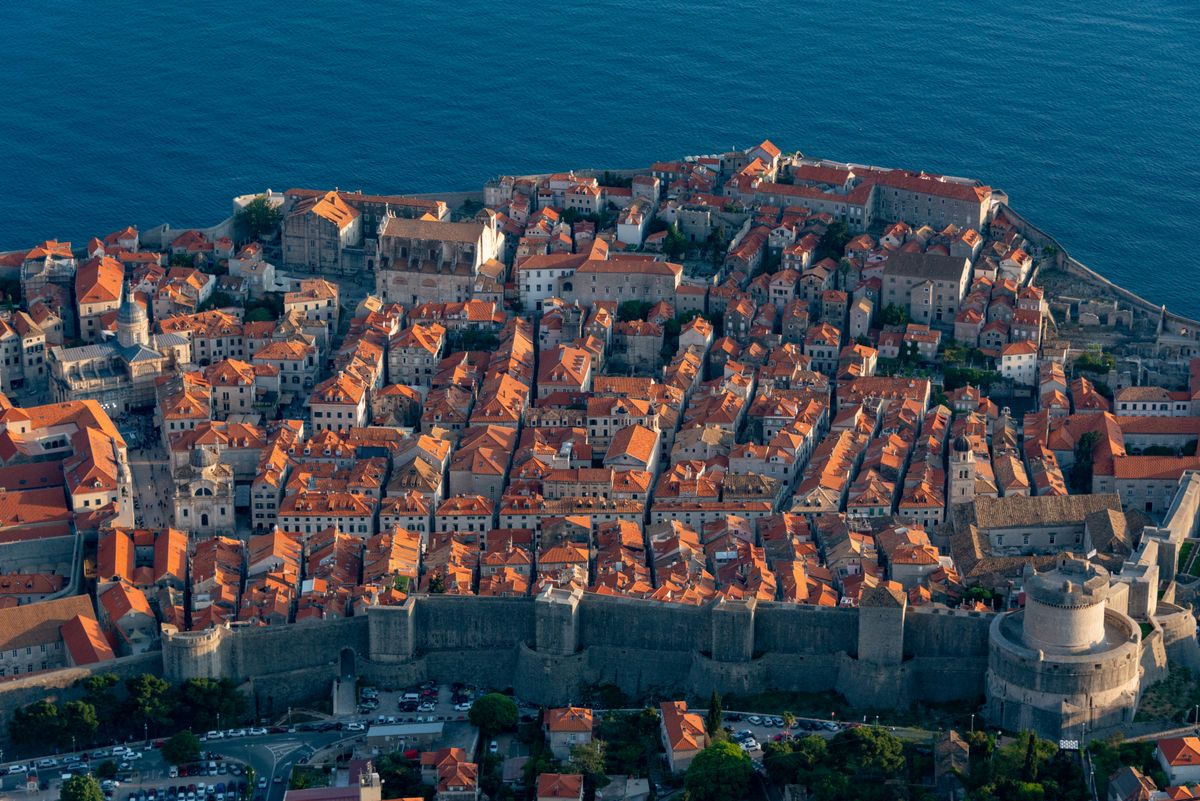
Croatia, before the dream
Croatia is a parliamentary republic, a member of the European Union and of the Schengen area, using the euro since 1 January 2023. U.S. citizens may visit visa-free for up to 90 days in any 180-day period across Schengen; anything longer runs through a temporary-residence application under the Aliens Act, filed at a Croatian consulate or — for visa-free nationals — at the competent police administration in Croatia (MUP). The safety frame is dated: the U.S. State Department rates Croatia Level 1 — Exercise Normal Precautions — advisory dated 18 May 2026.
Start with who can stay, because Croatia sorts movers by how they will live, not by a single “visa.” People arriving for a Croatian job or highly qualified work use the stay-and-work permit or the EU Blue Card. Remote workers paid from abroad use the digital-nomad stay, capped at 18 months in total. Families use reunification, with a two-year sponsor rule and captured exceptions. People who will not work at all — on savings, investments, or a pension — use temporary stay “for other purposes,” which is normally not extendable and does not count toward long-term residence. One plain limit belongs up front rather than in a footnote: Croatia has no named pensioner or passive-income residence category, and this page does not market it as an easy retirement destination. The one retiree-shaped door — an extension for retired property owners over 60 — is one card among the routes below, with its official checklist still a printed gap.
A short history, kept neutral
Croatia’s modern migration framework is recent and still moving: the current Aliens Act dates from 2020 and has been amended repeatedly — in 2022, 2025, and twice in 2026 — while the euro and full Schengen application both began on 1 January 2023. The digital-nomad category, created earlier in the decade, was reworked by the 2025 amendment into its current 18-month maximum.
The places compared below grew up in different worlds: Zagreb as the inland capital, Split around a Roman emperor’s palace that is still a living old town, Dubrovnik as the walled centre of the old maritime Republic of Ragusa, Rijeka as the northern port, Zadar on its northern-Dalmatian peninsula, and Osijek inland on the Drava in Slavonia. Neutral orientation, printed because it explains the country better than any slogan.
Ways in, separated by life
Checked 8 October 2026 under the Aliens Act as amended (Official Gazette 40/2025 and 55/2026) and current MUP guidance. The police administration or consulate handling your file governs every item below. The order is by life situation, not by age: work first, then remote work, then not working, then family and the long statuses.
Long stays start with temporary residence
Short stay is 90 days in any 180-day period across Schengen — no work rights, not extendable. Anything longer is temporary residence, applied for at a Croatian consulate or, for visa-free nationals, at the competent police administration in Croatia. General conditions (MUP): a stated purpose, a valid travel document, means of subsistence, health insurance, a clean criminal record at first application, no entry ban or Schengen alert, and no public-order, security or health threat. Printed gap: no U.S.-facing Croatian consulate residence checklist was captured for this edition — the page names the MUP/MFA channels only; confirm the current checklist with your consulate before you file.
Work & the EU Blue Card — a job, a business, a profession
For people taking a Croatian job — and for anyone whose plan involves working or running a business in Croatia, which requires the applicable stay-and-work basis rather than a visitor’s stamp. The permit runs only within the approved job and employer framework, under current MUP practice: simplified employer change after six months with the employer you arrived on; permitted unemployment of up to three months (permit under two years) or six months (over two years), with notice to the Croatian Employment Service within five days of the job ending; and a 90-day decision deadline from a complete application. New duty: Article 92a (Official Gazette 55/2026) creates a Croatian language and Latin-script examination at level A1.1 for specified stay-and-work permit holders — employer-paid, with exemptions for people educated in Croatia and speakers of a South Slavic language; the exam-proof duty starts on 4 June 2027, and filing mechanics beyond the Act print as a gap. The EU Blue Card is the highly qualified track under its own articles; its current salary threshold is a GAP — the mechanism prints, the figure does not.
Digital nomad — up to 18 months in total, foreign work only
For people working through communications technology for a company or their own company not registered in Croatia; no Croatian employer and no Croatian clients. The stay is granted for up to 18 months in total — if the first grant is shorter, one extension of at most six months may be sought no later than 60 days before expiry. Never print “18 + 18” or a three-year nomad stay. The income test is €3,622.50/month (2.5× the previous year’s average net salary), or savings of €43,470 for 12 months or €65,205 for 18 months; each additional family member adds €144.90 (10% of the average salary). Evidence is regular foreign-income inflow or a bank certificate; documents include a passport valid three months beyond the stay, health insurance covering Croatia, foreign-work proof, means proof, a legalised clean-record certificate and a Croatian address. Close family joins only after the nomad’s stay is granted, and a fresh application waits six months after expiry. Nomads are exempt from HZZO registration and fund their own healthcare. Open point, printed as one: the MUP exclusion list for the five-year clock does not name nomad stay, so whether nomad time counts toward long-term residence is unconfirmed — do not plan on it either way.
Temporary stay “for other purposes” — staying without working
For people who will not work in Croatia and fit no named category — living on savings, investment income, or a pension. The means test currently in force is at least 60% of the previous year’s average monthly net salary: the 2025 average net salary is €1,449 (published March 2026), so the current test is €869.40/month. It is the other-purpose means test — tied to the salary year and moving with it — never a “retirement visa threshold.” Acceptable evidence (MUP): a pension statement, a written maintenance declaration from a family or household member, or a bank certificate. The stay is normally not extendable; a fresh other-purpose application may be filed only six months after the previous one expires. It carries no work right, family reunification is not granted to family members of an other-purpose holder, and ordinary other-purpose time does not count toward the five-year long-term-residence clock — subject to the property-owner exception in the next card. The couple figure on this test is a printed gap until a checklist confirms the family increments.
The over-60 retired property-owner exception — one card among the routes
Croatian law (Aliens Act Art. 57(6), Official Gazette 40/2025) allows an over-60 retired third-country national who owns property in Croatia to seek an exception: an other-purpose stay may exceptionally be extended for that person, and for their spouse, common-law spouse, life partner or informal life partner. For this owner category — unlike ordinary other-purpose time — the extended time does count toward long-term residence. Printed gap: we could not capture MUP’s category-specific checklist, extension length, or repeatability for this edition. Confirm the exact document list, extension period and whether repeat extensions are granted with the competent police administration before buying property or filing. We print no minimum property value, because no official text captured states one. This exception is a narrow conditional door inside a page that does not treat Croatia as a settled retirement-visa country.
Family, long-term residence & citizenship
Family reunification: for a close family member of a third-country national on a qualifying stay-and-work permit, the sponsor must have had uninterrupted approved temporary stay for at least two years (Aliens Act Art. 63(2) as rewritten by Official Gazette 55/2026), with earlier reunification for a minor child where both parents hold Employment-Service-opinion work permits or the sponsor is a single parent, and no two-year restriction where the permit was issued without an Employment Service opinion (e.g. key personnel or EU Blue Card). Family reunification is not granted to family members of an other-purpose holder. Family members of a Croatian citizen, long-term or permanent resident, or protection holder may work without a stay-and-work permit (MUP). Long-term residence needs five uninterrupted years of qualifying temporary stay (absences of no more than 10 months in total and 6 months at once; study counts at half value; other-purpose time is excluded, subject to the over-60 owner exception), plus means, health insurance, Croatian language and Latin script. Permanent stay is a set of narrow categories, not the general five-year status. Citizenship rests on the official integration guide: eight years’ continuous registered residence with permanent-residence status, Croatian language, Latin script, culture and social order, and renunciation of the prior citizenship or proof it will be relinquished — the consolidated Act detail is a printed gap, and no dual-citizenship claim is printed for ordinary naturalisation.
Work rights, route by route: stay-and-work permit — the approved job/employer framework only; EU Blue Card — highly qualified employment (threshold a printed gap); digital nomad — foreign employer or own foreign company only; other purposes, the non-working door included — none; family members of a Croatian citizen, long-term or permanent resident, or protection holder — may work without a stay-and-work permit or work-registration certificate (MUP).
Health paperwork: entering vs staying
The paperwork facts, kept apart from medical advice. Checked 8 October 2026.
To enter (short stay)
- Vaccines & certificates: the WHO international travel country list records no yellow-fever entry requirement and no WHO vaccination recommendation for Croatia — a dated absence (checked 8 October 2026), printed as one.
- Health forms: no general entry vaccine mandate was found in the official sources captured.
- COVID-era documents: the national public-health institute’s autumn-2026 COVID page is a recommendation for risk groups, not an entry or residence mandate — the absence is recorded as dated, not permanent.
- Health insurance: no insurance mandate applies to visa-free U.S. short-stay entry; insurance becomes mandatory at the residence stage, below.
To stay (long stay)
- Form 18a — tightened 30 April 2026. Under the residence rulebook (Official Gazette 43/2026, in force 30 April 2026), a third-country national from the visa regime attaches the Certificate of Health Condition and Vaccination Status — Form 18a, not older than 90 days — to a first temporary-stay application; an extension applied for inside three years in Croatia needs proof of a completed health examination (county public-health institutes / HZJZ; proof not older than 90 days). The form records treatment for active tuberculosis, a chest X-ray result not older than three months, a stool culture for Salmonella Typhi and Paratyphi A, B and C not older than three months, and vaccination status for diphtheria, tetanus, polio and measles — all done before arrival; Croatian institutes do not complete the form after arrival. Whether U.S. visa-free entrants are outside this in every route is not yet officially confirmed — confirm per route with the consulate or police administration before you file. Never read this page as “Americans are exempt.”
- HZZO registration — within 8 days. A third-country temporary resident with no other insurance basis registers with the competent HZZO office for the place of stay within eight days of the approved stay (form Tiskanica 2 with the MUP notice of approved residence). On 2026 figures the assessed self-pay contribution is €124.96/month (16.5% of the €757.34 lowest monthly base — a 2026 figure, to be re-derived from the next annual base order), with each insured family member a further €124.96/month. Full rights are conditioned on a one-off back contribution for up to 12 months since previous cover ended — up to €1,499.53 on 2026 figures; the Tax Administration decision states the exact assessed period and total. Until at least 30 days are paid, cover is emergency-only. Once you hold HZZO insured status, supplementary dopunsko at €15/month (€180/year) covers HZZO co-payments — an add-on to public cover, not a substitute and not a permit-stage policy.
- Who is outside HZZO: digital nomads are not required to register and bear their own healthcare costs; the permit application itself needs travel or private health insurance covering Croatia. No euro minimum for the residence permit itself is stated by MUP — the €30,000 figure belongs to the 30-day Visa D travel-medical requirement and is never printed as a residence-permit minimum.
- School vaccination — split by level. Compulsory primary school: missing or incomplete vaccination records do not bar enrolment; the record is presented to the school doctor at the pre-enrolment examination and gaps are caught up during the school year (the first-grade MMR boost is preferably done at enrolment). Kindergarten: national rules condition enrolment on orderly vaccination under the mandatory programme, except for medical contraindications, verified by a physician before entry.
Healthcare reality, briefly: the classification captured for this page places clinical hospital centres (KBC) in Zagreb (two), Split and Rijeka, and general hospitals (OB) in Dubrovnik and Zadar. Bed counts, specialty depth and referral patterns from official hospital sources were not captured and print as a GAP — names and classification only. The public system works once HZZO status exists; before it, and for nomads throughout, private cover is the plan.
Living in Croatia, travelling in Europe
Croatia is in both the EU and the Schengen Area, and the benefit is real: a Croatian residence permit makes short trips across the Schengen Area easy — border-light, tourism-length travel without a separate short-stay visa for each country. The limit travels with it in the same breath: the permit does not give a right to live or work in another member state. Moving to another EU country runs on that country’s own residence conditions, and EU mobility after long-term residence follows its own tests. Benefit and limit, printed together, every time.
Government, briefly
Executive power sits with the Government led by the Prime Minister; the President is head of state. The officeholders below are officially confirmed.
Named as President of the Republic on the promulgation decisions of the Aliens Act amendments in Official Gazette 40/2025 and 55/2026.
Parliament voted confidence in his third government on 17 May 2024 (79 to 61, one abstention; Croatian Government reporting). Stated as a fact of office, without commentary.
Croatia adopted the euro and full Schengen application on 1 January 2023. The practical point for a resident: the Aliens Act was amended in 2025 and twice in 2026, so verify the rule at filing, not from memory.
Taxes: residence by dwelling and days, pensions without a treaty
Croatian tax residence is not a simple “183 days in one year” test, and no other country’s wording is imported here. Under General Tax Act Article 43 (Tax Administration’s residency page, captured for this dossier), a dwelling held in ownership or possession continuously for at least 183 days in one or two calendar years can establish permanent residence even without actually living in it; habitual residence is shown by a non-temporary stay, deemed met by a continuous or time-linked stay of at least 183 days in one or two calendar years, with short interruptions of up to one year not breaking it. Domestic tie-breakers then look to the family’s residence and predominant stay or work — and if the other state does not treat you as resident, Croatia prevails. A resident’s tax base is worldwide income; pensions are employment-source income in the Tax Administration’s source list, so U.S. Social Security and U.S. private pensions are taxable for a Croatian resident, with foreign-pension advances collected by Tax Administration decision after taxpayer-register registration. The basic personal allowance is €600/month (Croatian Tax Administration current page, updated 23 January 2026; re-verified 8 October 2026), before locally set annual rates within the statutory ranges, defaulting to 20% up to €60,000 and 30% above. No foreign-tax-credit mechanics are promised here: the captured official texts do not isolate them.
No treaty relief is available. The U.S.–Croatia income-tax treaty was signed on 7 December 2022 and a protocol on 28 April 2026, but it is not in force — the IRS still lists Croatia under “Non-Treaty Countries” (January 2026). The five-year returnee relief in the Income Tax Act (Article 46) is a 100% reduction on employment income/salary only, for qualifying Croatian citizens and specified emigrants or descendants — narrow, salary-only, and not a pensioner route for an ordinary U.S. mover. The digital-nomad exclusion (Article 9) shelters only receipts earned from an employer not registered in Croatia by virtue of the nomad status itself: it does not extend to dividends, interest, rent, capital gains, pensions or Croatian-source income, it does not stop the person becoming Croatian tax resident on other income, and it ends with the status. U.S. citizens remain taxable by the United States on worldwide income wherever they live, and FBAR/FATCA obligations continue.
Places to compare in Croatia
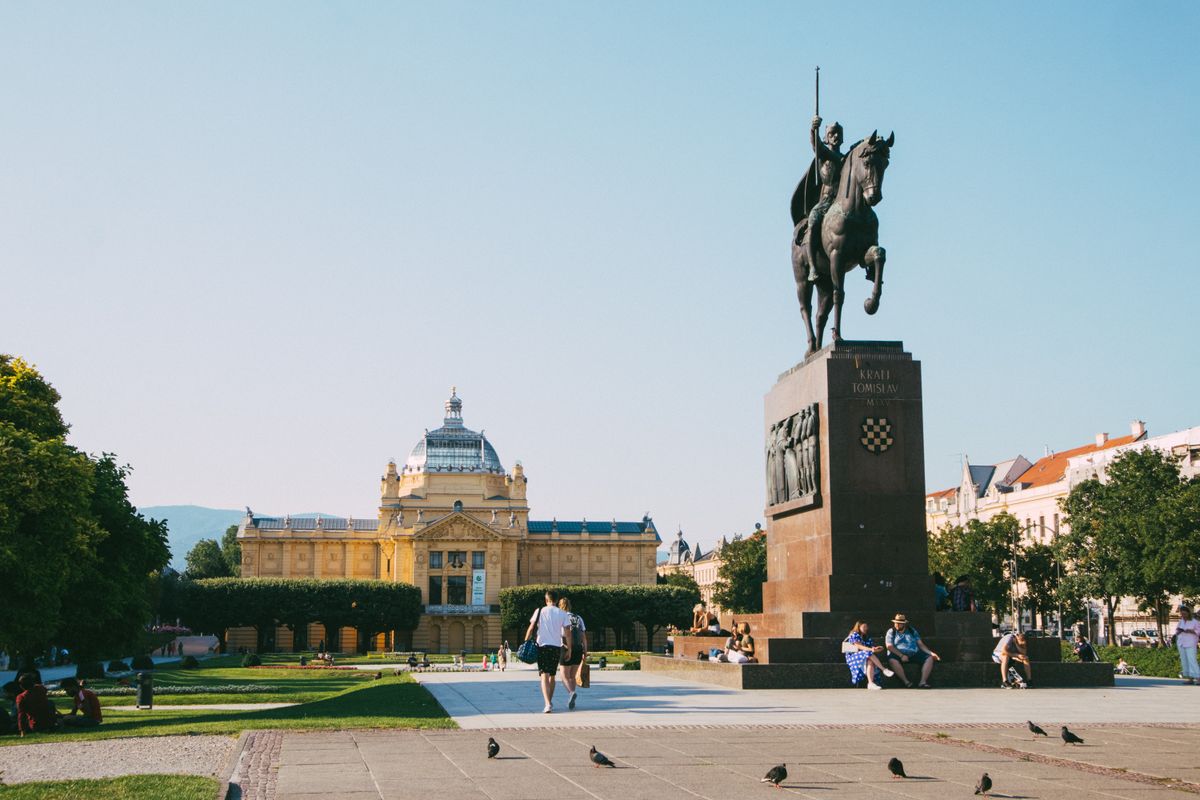 Zagreb — the capitalThe capital and the natural base: both clinical hospital centres, the capital’s FIDI-verified mover contact, and long-term asking rents from a captured 2-bed at €1,221/month (45 m²) to €1,700/month near Trnje.
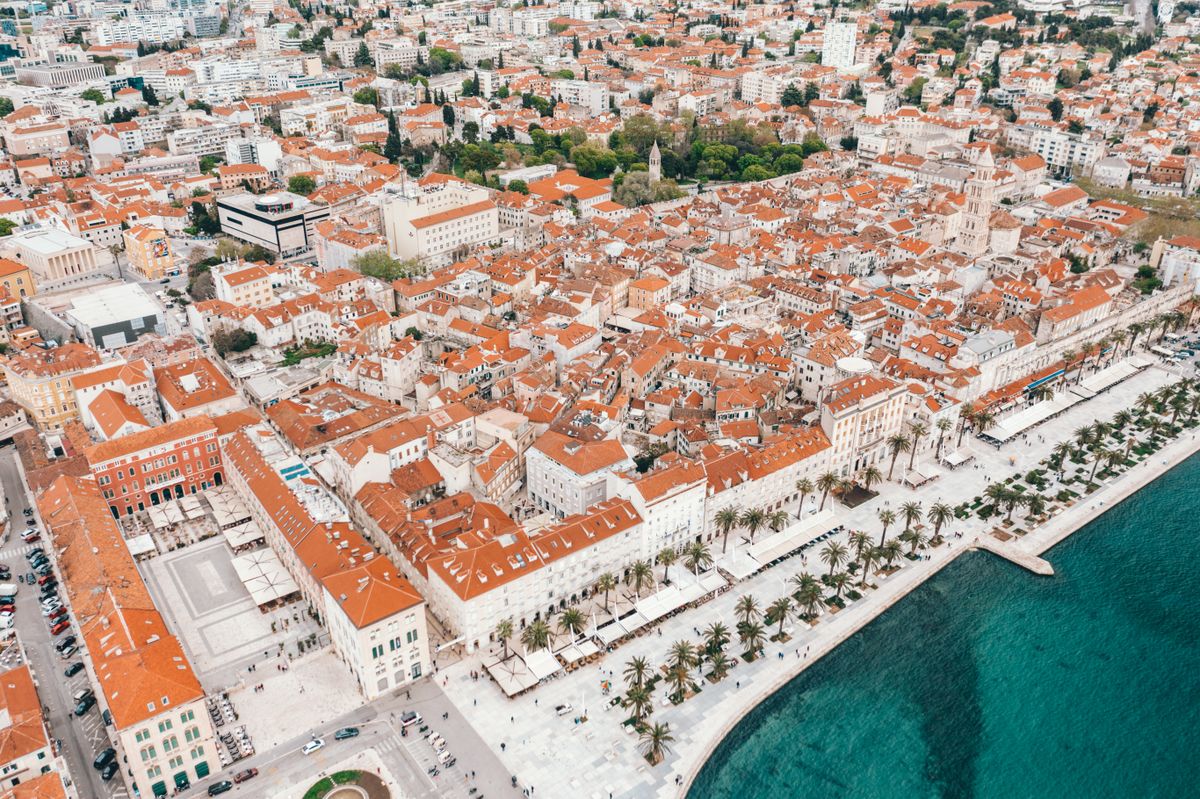 SplitThe waterfront city inside Diocletian’s Palace, with KBC Split for care and captured long-term 1-bed samples at €900 (from 2 Nov 2026) and €1,159/month.
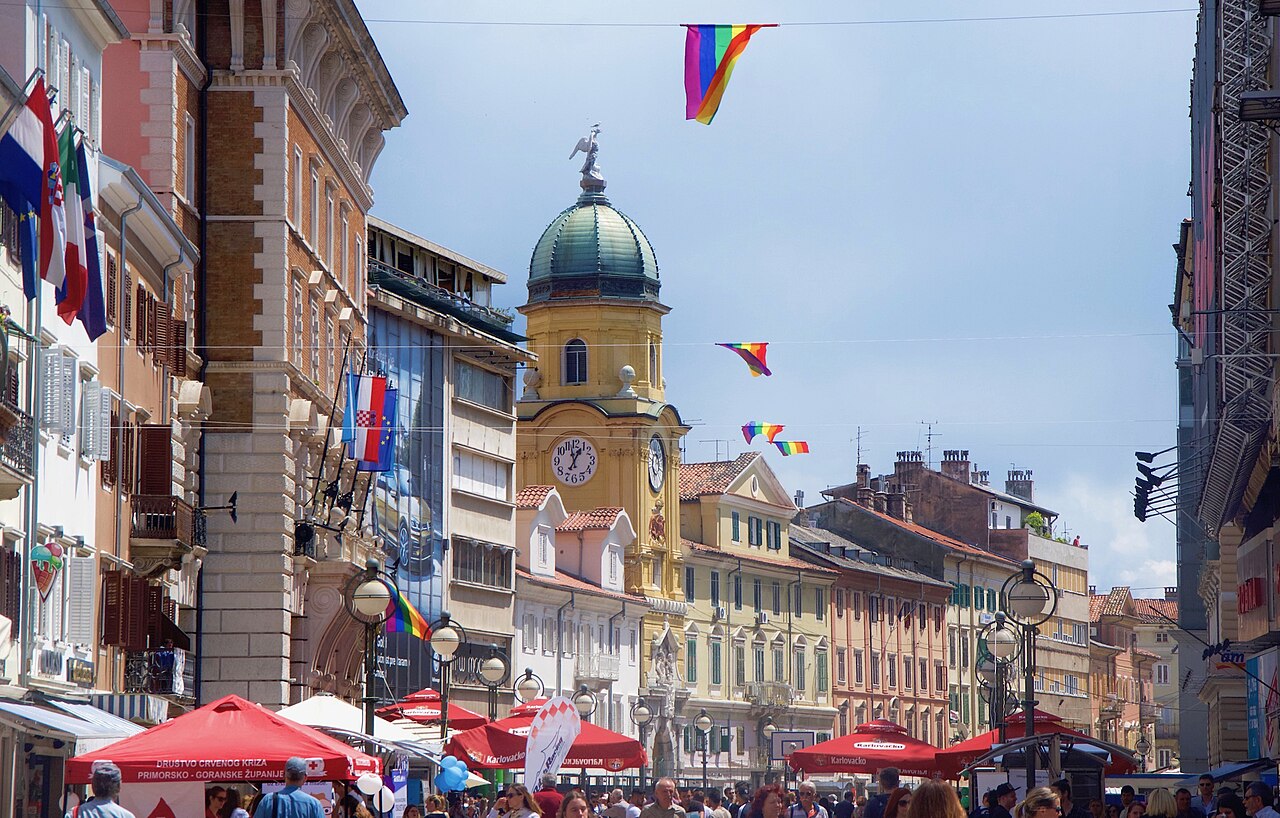 RijekaThe northern port beneath KBC Rijeka: a captured 1-bed near the centre at €773/month from 2 October 2026. Photo: Wikimedia Commons.
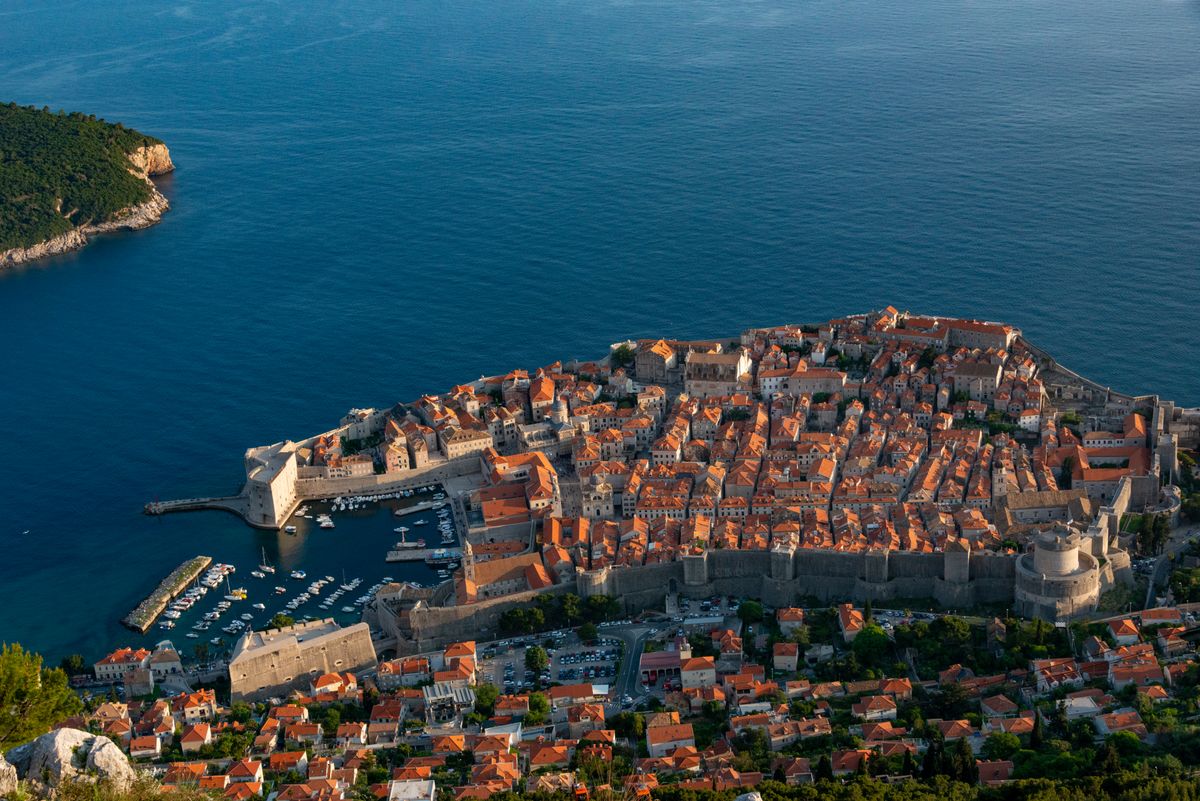 DubrovnikThe famous walled city prints at premium prices on receipt: a 3-bed in Ploče at €2,300/month plus utilities and a Flatio 1-bed at €800 (from 29 Sep 2026). Nobody drops it for costing more.
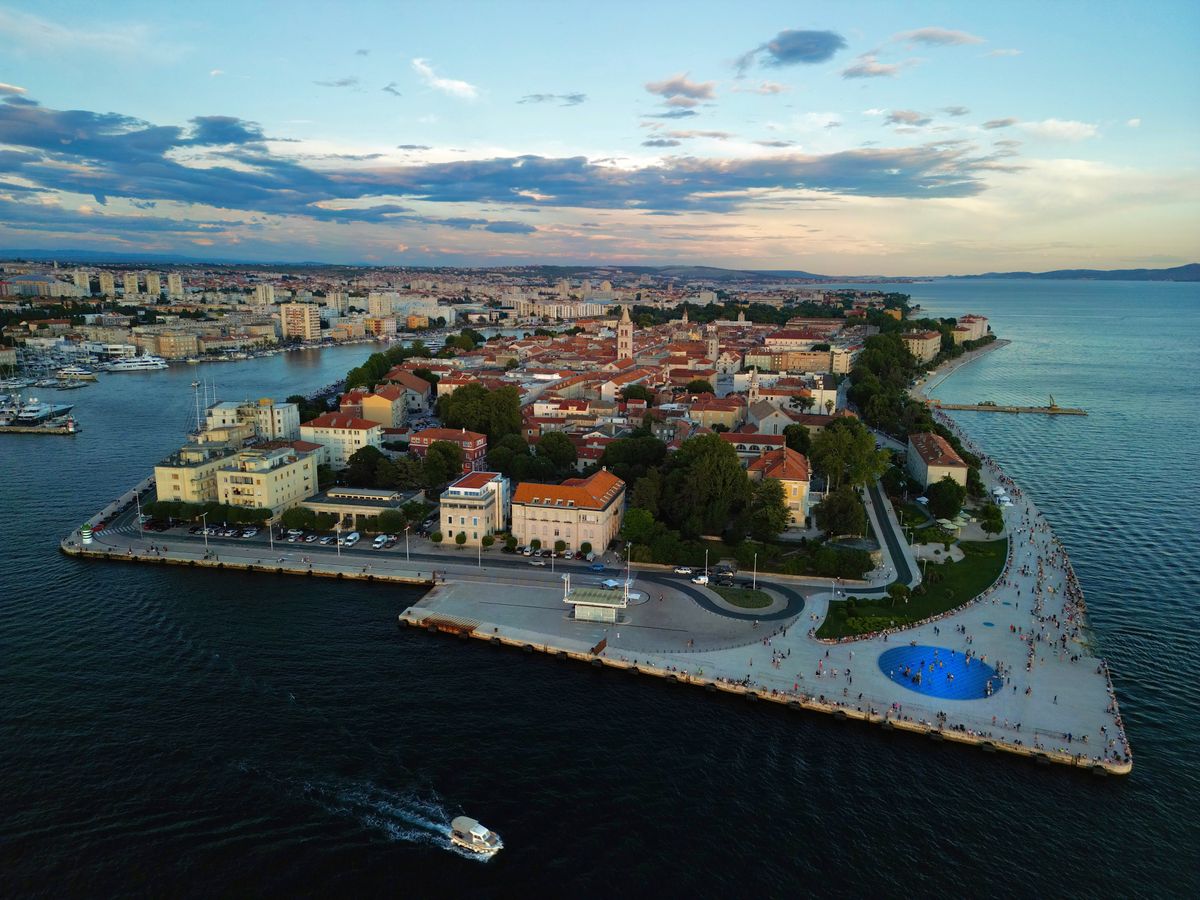 ZadarSun Salutation at the tip of the old-town peninsula and a general hospital: the captured long-term 1-bed (60 m²) lists at €889/month on a 3-month term.
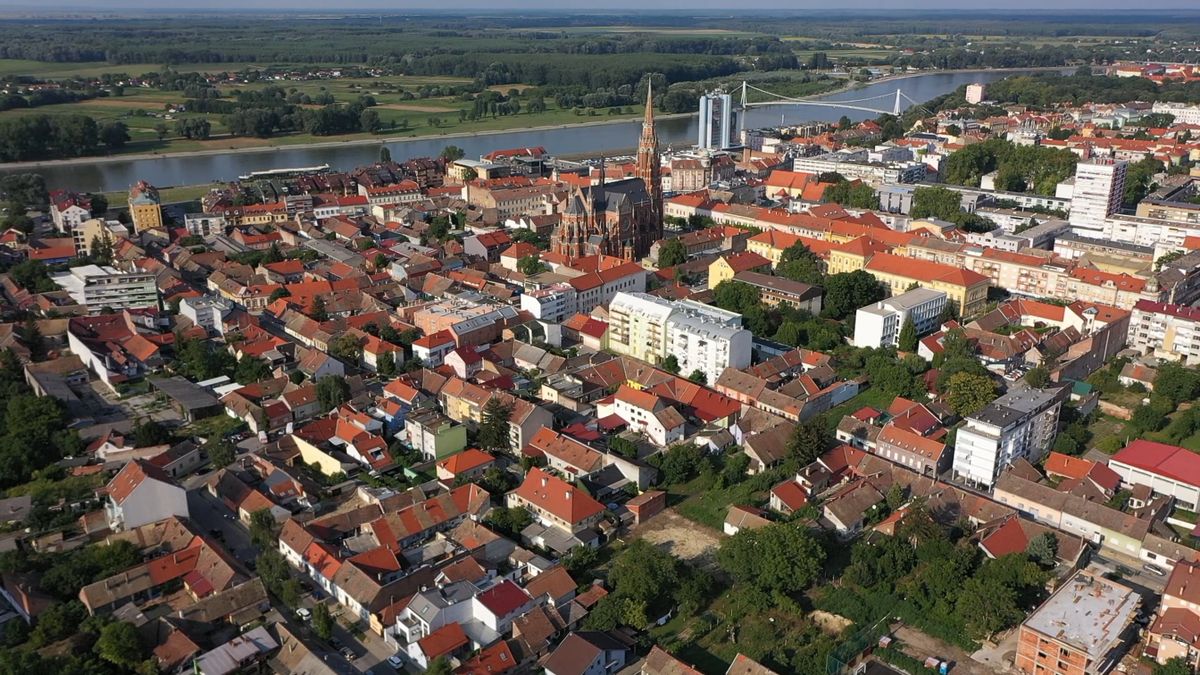 Osijek — the inland alternativeSlavonia’s Drava-side city carries the page’s best-evidenced inland rents: a 1-bed at €570/month (min. 180 days) and a 2-bed at €750/month, both from September 2026.
Rents above are dated individual asking samples — never a median and never a couple budget. No island place is included in this edition because no dated asking rents for one were captured; that absence is printed, not filled in.
Can I check the people before I pay anyone?
We distinguish sourced verification from source-only listing. Every booking and fee is confirmed in writing directly with the firm, and the official registers and association directories win over anything on this page. This shortlist is PARTIAL: the international-move category and one tax firm carry directory-level verification; the lawyer category is listed-not-verified; Croatian-side tax advice and tenant help carry named-register gaps, printed instead of filled.
Moving your belongings
Directory entries (not independently verified as movers): Gosselin Croatia (IAM membership, via MoverDB) and PSS International (UK, FIDI/FAIM, serves Croatia) print as listing-only, based on source pages and directories, with no independent legal, regulatory or mover-licence confirmation. Confirm licences, FAIM status, insurance, final weight and price in writing before booking with any mover.
Verified — FIDI affiliate directory, captured 8 October 2026: the FIDI “Find a FIDI Affiliate” directory lists a single Zagreb affiliate at Radnička cesta 27, Zagreb, phone +385 1 6011 111, email zag.fidi@matrixmobility.com; the directory’s affiliate-logo file identifies Matrix Global Mobility, and FAIM compliance is mandatory for FIDI affiliates and audited by EY per the directory page. The directory entry is captured; the FAIM certificate number itself was not displayed, so confirm the affiliate’s exact trading name and FAIM certificate number when requesting the quote.
Source-only, listed without independent verification: Gosselin Croatia (IAM, via MoverDB), PSS International (UK). Directory: fidi.org (Croatia affiliate page, opened 8 October 2026).
Immigration lawyer — listed, not verified
Listed — NOT verified (HOK Imenik row not captured): Župan, Babić & Antunović (ZBA): the firm’s own site (zba.hr) confirms a citizenship/immigration practice and names partners Ivan Župan, Melita Babić and Luka Antunović at firm level, and Relocate.me’s Croatia directory lists the firm for residence permits, company formation and citizenship by descent, working in English. Verification status: no live HOK Imenik row was captured for this edition (the Bar’s public directory at hok-cba.hr/imenik is a search form), so every immigration lawyer here remains listed — not HOK-row-verified, whatever any firm page asserts. Before instructing, search the live HOK Imenik and confirm each lawyer’s current registration.
How Croatian lawyers actually charge: the HOK Tariff (Tarifa o nagradama i naknadi troškova za rad odvjetnika, hok-cba.hr) is an official points/tariff schedule with hourly agreements possible — a published legal-fee schedule, but not a firm’s flat package price; no captured Croatian immigration firm publishes a flat residence fee, so firm pricing remains quote-only. Government fees are MUP’s and never blended with legal fees (a practitioner guide puts total government fees for the nomad permit at roughly €110–€180 depending on route and expedition).
Sources: zba.hr/en (firm, firm-level); relocate.me/relocation-companies/croatia (directory listing); hok-cba.hr/imenik (Bar register, row not captured); hok-cba.hr/propisi-i-akti/tarifa (official tariff schedule). Fees: Mandracchio Capital (mandracchio-capital.com), lawyer-voiced nomad guide — practitioner content, government-fee framing only. Accessed 8 October 2026.
Tax — U.S. side priced in writing, Croatian side a named gap
TFX — Taxes for Expats is listed with published fees: a federal return from $450 (verified listing datum, scale-checked as a starting price rather than an average), state $160, FBAR $85, Form 8938 $100, and streamlined filing at $1,450–$1,650. Confirm scope and final quote in writing with the firm. 1040 Abroad and Greenback Expat Tax Services are listed — not vetted: 1040 Abroad’s services page heads federal return preparation at $500 while the same page’s text says $400, so neither figure is quoted from it (its streamlined $1,800 and renunciation $2,600 packages are shown consistently), and Greenback is a second U.S.-filing option (FBAR/Form 8938 guidance matches the spine; no Croatia-specific page captured).
GAP — Croatian-side tax adviser: the Croatian tax counsellors’ chamber register (hkps.hr / HKPS) is the named register for a Croatian-side adviser, but no named adviser was captured for this edition. This matters precisely because Croatia has no in-force U.S. treaty, pension advances work by Tax Administration decision, and the €600/month personal allowance only helps if the return is filed right. Croatia prints PARTIAL.
Source-only: taxesforexpats.com (TFX), 1040abroad.com, greenbacktaxservices.com. Accessed 8 October 2026.
Health insurance — a dated carrier table, labelled minimum-only
Pacific Cross’s Essential Plan (EU ROW table) prices worldwide cover excluding the USA, exact-age annual premiums in USD including a 40% low-claims discount: age 65 — USD 1,731.30 (USD 1,298.47 with a 20% coinsurance) and age 75 — USD 3,527.63 (USD 2,645.73 with a 20% coinsurance); the table runs to age 80 with 2026 revision codes. We show it as a broker’s dated minimum-cover reference from one public table, not a broker-verified recommendation: premiums are individually underwritten; a second Pacific Cross Area 1 table ends at age 70 (age-70 tiers USD 4,024.83–10,497.78); broader comprehensive tables cap at 70 and enrolment ceilings around 74–75 remain the market reality — never read age-75 pricing as available across the market. (Sources: insudoc.com/dl/7440.pdf and /dl/7439.pdf, both captured 8 October 2026.) Dopunsko at €15/month is a co-payment add-on that exists only after HZZO insured status — never a substitute for it, and never the residence-permit policy.
Source-only: Pacific Cross premium tables via insudoc.com.
Rentals — platforms, no tenant-representation agency
GAP — no named tenant-representation agency was verified for this edition; the rental shortlist is platforms and direct-listing sources only, and every figure is a dated individual asking sample. Njuskalo.hr is the dominant Croatian listing portal for the inland and capital hunts; Flatio carries furnished contracts with utilities included, priced accordingly; Longtermlettings supplies the dated Šibenik and Osijek samples shown on the city pages here and in earlier editions; Dubrovnik Apartments & Villas is the dated Dubrovnik long-term source. Asking rents are samples, not medians; no pet-friendly, walled or unlimited-service claim is printed.
Source-only: njuskalo.hr, flatio.com, longtermlettings.com, dubrovnik-apartments-villas.com.
Moving with a pet
APHIS — the anchored source: the new EU non-commercial animal-health certificate takes effect 1 October 2026 (commercial 17 October 2026); Croatia is a listed country whose model certificate is the bilingual EU form (English plus Croatian), and the pet must arrive within 10 days of APHIS endorsement. Rabies titres are not required for dogs, cats, or ferrets travelling from the U.S. Life Unleashed is listed as a relocation-service contact; no Croatia-based pet-relocation agent was verified for this edition — that absence prints as a GAP.
Anchored: aphis.usda.gov. Source-only: lifeunleashed.com.
Croatian trivia: for the group chat
Zagreb’s funicular is a 66-metre commute
Zagreb’s working funicular (uspinjača) on Ilica is about 66 metres long — one of the world’s shortest working funiculars, and a city’s ordinary way to climb between downtown and the Upper Town. (Captured from the city’s funicular source for this edition.)
Slavery was abolished there in 1416
The Republic of Ragusa — Dubrovnik’s city-state — abolished slavery and the slave trade in 1416, one of the earliest such laws in Europe, more than four centuries before many larger powers followed. (Captured from the city-state history source for this edition.)
The euro and Schengen began the same day
Croatia adopted the euro and full Schengen application together on 1 January 2023 — a date that shows up on this page again in the Government block, because it changed how residents travel and pay on the same morning. (Official Gazette and euro-adoption sources captured for this dossier.)
The cravat carries a Croatian surname
The word “cravat” comes from the neckerchiefs of Croatian soldiers whose name Europe adapted into fashion vocabulary — the accessory still carries its origin in its name. (Captured from the linguistic-history source for this edition.)
A palace became a city, and stayed one
Split grew inside the retirement palace built for the Roman emperor Diocletian (completed around AD 305) — residents still live, shop and hang laundry inside its Roman walls and cellars, which is why the city page calls the old town inhabited rather than preserved. (Captured from the palace-UNESCO source for this edition.)
More than a thousand islands, none of them compared
Croatia counts well over a thousand islands, islets and reefs along its coast — and this edition still compares no island place, because no dated asking rents for one were captured. The trivia is verified; the rent file is what’s missing, and the city grid above says so. (Island count from the captured coastal source for this edition.)
Inside the dossier
A short preview of what the full interactive dossier does with Croatia, shown in skeleton.
The question
Which door fits the life you are actually bringing? Croatia answers differently for a worker, a nomad, a family, a business owner and a non-working long-stayer — and the dossier never blends the answers.
What the sources say
Work runs on the stay-and-work permit or Blue Card (with the A1.1 language-exam duty from 4 June 2027 for specified permits, employer-paid). Remote work from abroad runs on the nomad stay: 18 months in total at €3,622.50/month in means, savings €43,470 for 12 months or €65,205 for 18. Not working runs on other-purpose stay at €869.40/month in means — normally not extendable, six-month wait, no work right, and outside the five-year long-term clock. The over-60 retired property-owner extension is the one exception that counts — and its checklist is still to be confirmed at the police administration before you buy or file.
GAP: the exact over-60 document list, extension period, repeatability, the couple figure on the other-purpose test, and the current Blue Card salary threshold are printed as gaps inside the dossier, addressed by the police administration and consulate before money moves.
City & budget preview
Pick how you would live for a full year and the planner prices it in local terms — dated asking rents from the city cards above, HZZO’s €124.96/month on the 2026 base for a resident who registers on time, dopunsko’s €15/month once insured, and the Tax Administration’s pension-advance mechanics. It will not invent a couple budget where no dated couple-sized rents were captured.
Work the checklist
Before you pay anything
While you scout
First month after you arrive
What to email
- Police administration / competent consulate — the over-60 checklist, extension period and repeatability; your route’s current checklist; Form 18a applicability per route.
- HZZO — your file’s documents, the assessed back-contribution period and total, and the dopunsko start date.
- Tax Administration — taxpayer-register registration and the foreign-pension advance decision.
- FIDI-directory mover (zag.fidi@matrixmobility.com; +385 1 6011 111) — trading name, FAIM certificate number, insurance, final weight and price in writing.
- TFX (listed, published fees) — written scope and final quote before engaging.
What to download
- MUP residence guidance for your route, saved the week you file.
- Form 18a (residence rulebook OG 43/2026 attaches the form) and Tiskanica 2.
- The Aliens Act as currently amended (Narodne novine) — the Act moved in 2025 and twice in 2026.
- Pacific Cross Essential Plan EU ROW table, for the dated insurance reference.
- APHIS pet-entry page for Croatia.
What to bring
- Passport valid 3 months beyond the stay, means proof, health-insurance evidence, legalised clean-record certificate (first application), Croatian address.
- Form 18a results (TB, chest X-ray, stool culture, vaccination status) if your route and nationality require it — completed before arrival.
- Children’s vaccination records for the school-doctor examination or the kindergarten file.
- Pet documents for the bilingual EU certificate path: endorsement inside 10 days of arrival.
Settled Overseas — the full dossier
Settled Overseas is the country-by-country operating system for an overseas move: verified facts, dated sources, gaps printed as gaps, and contacts you can check before you pay anyone. Every country works the same way — pick your places in the city matcher, build your budget, work the checklist, and keep the rules current as they change.
Croatia — the full dossier
The interactive route answers for your situation — work, nomad, family, business or not working — the city matcher across all six places, the budget builder in euros, the printable dossier, free updates when the Aliens Act moves again, and the checklists and scripts this page only started.
$149, one time
14-day promise: if it isn’t what was described, email us and we’ll make it right or refund you in full.
Copyright and terms note
Settled Overseas is independent research drawn from official sources captured on 8 October 2026 and first- and second-party listings dated in the text. It is orientation, not legal, tax, medical or financial advice, and it never grants a permit, an insurance policy or a professional engagement. Verify the current rule with the Croatian police administration or consulate having jurisdiction, HZZO, the Tax Administration and the official registers named on this page before acting. All publication decisions, professional engagements and filings remain yours.
Sources
Official texts captured for this dossier: Aliens Act as amended (Official Gazette 40/2025, incl. Article 57(6)); Act amending the Aliens Act (Official Gazette 55/2026, incl. the two-year family-reunification sponsor rule); residence rulebook amendments Form 18a (Official Gazette 43/2026, in force 30 April 2026); HZZO contributions and rights rulebooks (Tiskanica 2; 8-day registration) and NN 150/2025 (2026 monthly base €757.34); Tax Administration residency page (General Tax Act Article 43) and income-tax pages (€600/month basic personal allowance, page updated 23 January 2026). Fact-spine file: croatia-fact-spine-2026-10-08.md. Contacts: croatia-contacts-shortlist-2026-10-08.md. Official captures: croatia-official-captures-2026-10-08.md. Blocker closure: croatia-blocker-closure-2026-10-08.md. Checked 8 October 2026.
