 Settled OverseasSomeday Doesn’t Have to Become Never.
Mexico City
Ciudad de México · the deepest hospital city in Mexico — 2,240 m up
Who picks it — and why
Movers who want the country at full depth: the private hospitals the rest of Mexico transfers its hardest cases to — Médica Sur, the ABC campuses, the Ángeles network — the richest nonstop web to U.S. cities in the country, and a capital’s culture at highland temperatures instead of coastal heat. Mexico City is where Mexicans themselves go when care gets serious; that is the spine’s own framing, and this page keeps it.
Who should skip it
Skip it if altitude is a medical question: the city sits at about 2,240 m (7,350 ft), and that elevation gets a say in your first months whether you invite it or not. Skip it if you need the quiet end of the U.S. advisory — Mexico City sits at Level 2 on the State Department’s state list (29 May 2026 reissue, as reported), not Level 1. And skip it if megacity traffic and rainy-season downpours sound like a daily tax you don’t want to pay.
Not moving on a pension? There are other routes. The country page separates them — pension, passive income, remote work, family, and long stays — with their limits. Anything unverified is marked as a gap.
Monthly budget snapshot
- Rent, 1-bed city centre
- MXN 19,200 ≈ US$1,120/mo — verified Sep 2026
- Rent, 1-bed outside centre
- MXN 12,200 ≈ US$710/mo — same check
- Rent, 3-bed city centre
- MXN 42,900 ≈ US$2,500/mo — same check
- Total couple budget
- GAP — the check below captured rents only; no verified Mexico City couple basket, so no total is printed
Figures: ExpatDen long-term-rental check, verified September 2026 (Numbeo-sourced; converted at MXN 17.15 per US$1 as published there), read 8 October 2026. Samples, not a budget: colonias a few metro stops apart move these numbers hard in both directions.
Healthcare access
This is the deepest end of the spine’s map — the city other hubs transfer complex cases to. Médica Sur describes itself as part of the Mayo Clinic Care Network and Joint Commission International–accredited, with an international-medicine service for foreign patients (its own pages, checked 8 October 2026); Newsweek’s hospital ranking, as reproduced in check on 8 October 2026, puts Médica Sur and Centro Médico ABC (Santa Fe, and Observatorio) at the top of Mexico’s list, with the Ángeles network close behind. The country frame still applies: Medicare pays $0 in Mexico; IMSS voluntary cover costs MXN 20,600 a year at ages 60–69 and MXN 21,500 at 70–79 (2026); private cover broadly runs US$2,000–6,000+ per person per year, and the per-age price table for ages 60–75 remains a printed gap. The U.S. Embassy in Mexico City also hosts the Federal Benefits Unit — the Social Security office for cases in Mexico.
Climate, honestly
Highland, not tropical: about 2,240 m (7,350 ft) buys a yearly median temperature around 15°C. May, the warmest month, averages highs near 26°C and lows near 12°C; January, the coldest, runs about 19°C by day and 6°C at night. The honest trade is rain and altitude: the wet season runs roughly June to mid-October (more than 160 mm in July against about 5 mm in February), arriving as afternoon downpours, and winter nights are cold indoors in buildings built without heating. Most houses here have neither AC nor heat — the budget risk is the reverse of Mérida’s.
Getting around — and back to the US
The core colonias live without a car: the Metro and Metrobús networks cover the centre, and rides between neighbourhoods are cheap by U.S. standards. Driving is the tax — congestion is the city’s known constant. Benito Juárez airport (MEX) is the country’s U.S. door: route checks on 8 October 2026 list nonstop service to more than twenty U.S. cities across Aeromexico, American, United, Delta and the Mexican low-cost carriers — Houston, Dallas, Los Angeles, Chicago, New York, Miami and more. A second airport, Felipe Ángeles (NLU), serves some routes; which of your routes uses which airport is a per-trip check, printed here as a verify item rather than a claim.
Expat life & English
English runs deepest at the top of the private system — Médica Sur runs an international-medicine service for foreign patients — and in the capital’s international-facing neighbourhoods and institutions. Bureaucracy, clinics outside that top tier, and landlords run in Spanish; this is a Mexican megacity with foreign residents, not an enclave with Spanish subtitles.
Watch-outs
- The altitude is real: 2,240 m. Plan a slow first month, raise it with your doctor if your heart or lungs are part of the file, and re-check any altitude-sensitive medication plan.
- Mexico City is Level 2 on the State Department’s state list (29 May 2026 reissue, as reported) — exercise increased caution; neighbourhood choice is the working safety variable.
- Rainy-season afternoons (roughly June–mid-October) bring heavy downpours and flooded underpasses; the city also sits in a seismic zone, so building age and seismic diligence belong in any lease or purchase file.
A short city story
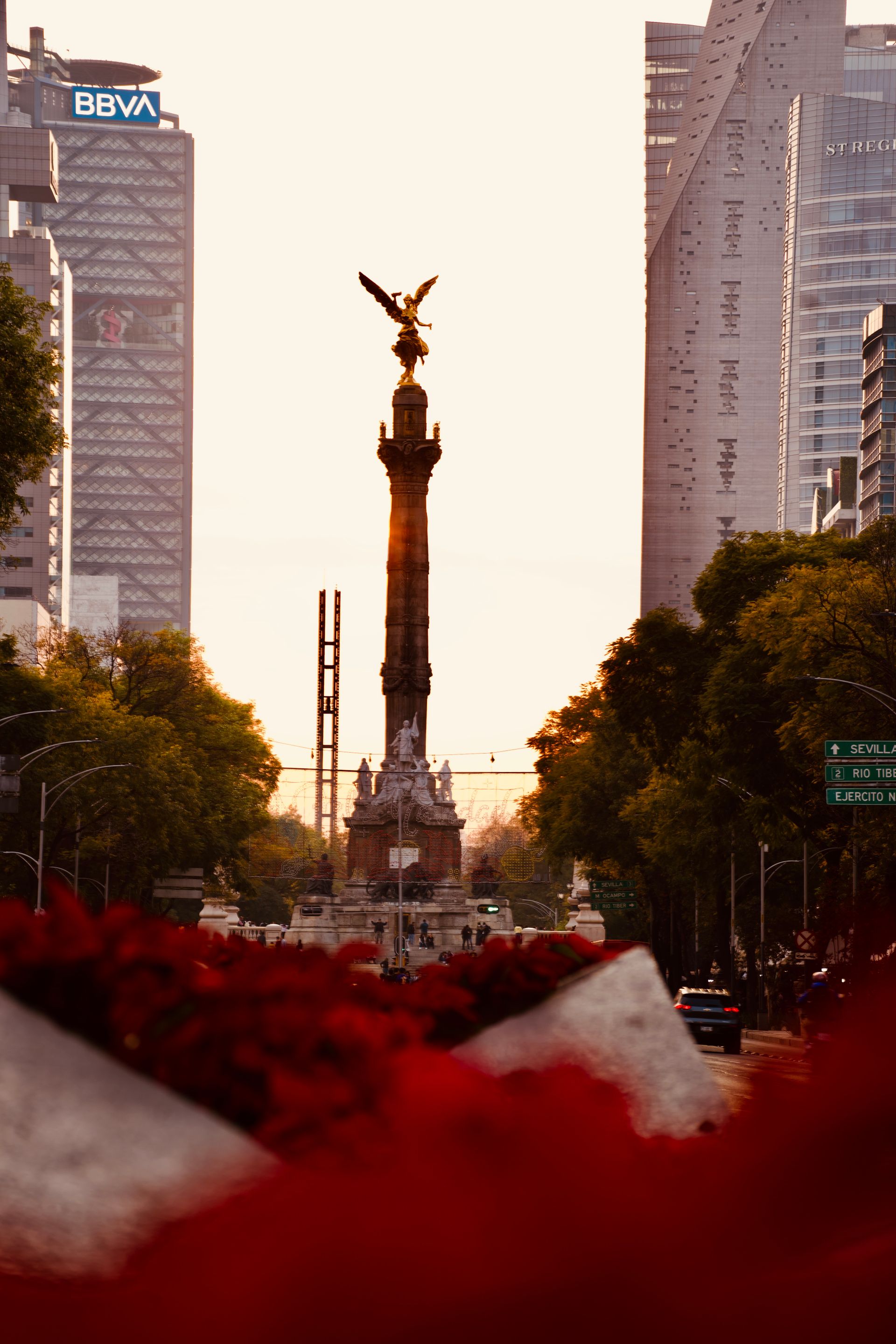
The hero above is the Ángel de la Independencia on Paseo de la Reforma — the monument the whole country recognizes at a glance, shot from the same street the capital uses for its Sunday ciclovía. Mexico City’s story for a mover is the reverse of the resort towns’: nothing here is arranged for foreigners, and that is precisely the depth — every hospital, ministry and nonstop flight the country has, in one high-altitude place.
Your next step
- Start with the interactive planner — your answers build your personal dossier
- City chapters with real couple budgets, and healthcare depth by city
- 14-day promise: if it isn't what was described, email us within 14 days — we'll make it right or refund you in full.
Secure checkout by Stripe. One product — every country. Free updates when rules change.
This page is education, built from public sources checked on the dates shown. It is not legal, tax, or medical advice; residency outcomes and underwriting stay with the Mexican consulates and the INM, insurers, and your own licensed advisors. Figures marked with a directory or broker name were read from that source; anything we could not verify is printed as a gap.