 Settled OverseasSomeday Doesn’t Have to Become Never.

Colombia
Colombia, researched country-first: the pensionado, rentista and digital-nomad routes as the Foreign Ministry’s own resolution states them, health paperwork for entering versus staying, the 183-day tax line, an honest Level 3 safety frame, and seven places compared on dated evidence — with the gaps printed where the research runs out. Every visa, tax and health figure below is sourced and dated (checked 8 October 2026).
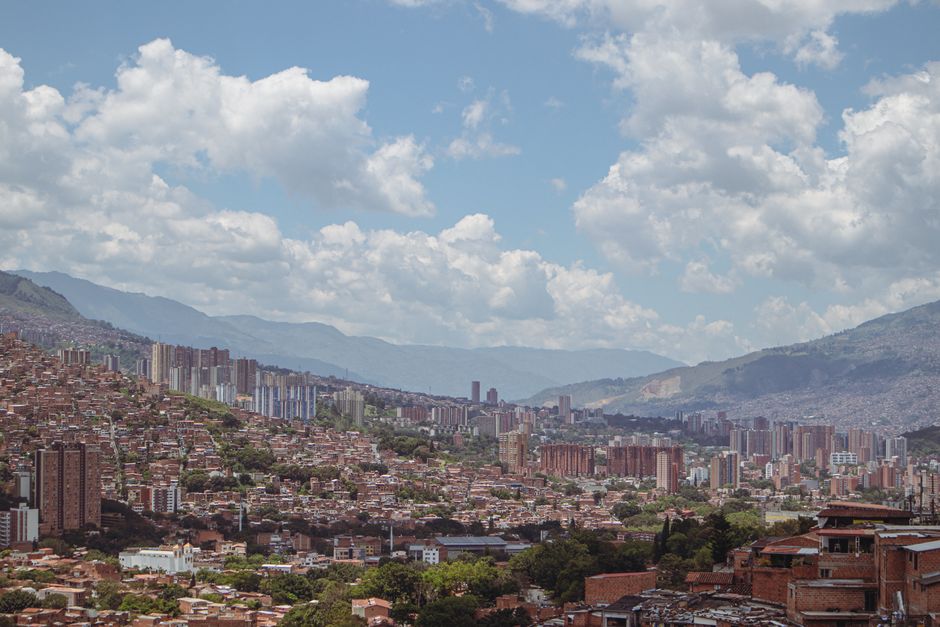
Colombia, before the dream
Colombia runs a three-step visa ladder under the Foreign Ministry’s Resolución 5477 de 2022: Visitante (V) for temporary stays, Migrante (M) as the residence track, and Residente Permanente (R) — and only M time counts toward R. The retiree route is the M Pensionado: a lifetime monthly pension of at least 3× the monthly minimum wage (SMMLV) — COP 5,252,715/month in 2026 (about US$1,622 at the 8 October 2026 exchange rate; the legal test is in pesos). It permits no work, runs up to 3 years, and — the rule Americans miss — it does not let you join the Colombian public health system (EPS); the compliance instrument is a private all-risk health policy. Passive income without a pension sits one rung down, in the V Rentista at 10× SMMLV, and remote work in the V Nómada Digital at 3× SMMLV — both visitor visas whose years never accumulate toward permanence.
The honest frame comes first on this page, not in a footnote: the U.S. State Department rates Colombia Level 3 — Reconsider Travel (advisory of 31 March 2026). None of the seven places below sits in a Do Not Travel zone, but the advisory’s street-crime warning is national. Colombia is a country where city, neighbourhood and daily habits carry the safety outcome — read the safety section before the city cards.
Safety, stated plainly
The U.S. Department of State advisory for Colombia, read in full on 8 October 2026, is Level 3: Reconsider Travel (updated 31 March 2026), citing crime, terrorism, civil unrest, kidnapping and natural disasters. Do Not Travel applies to the departments of Arauca, Cauca (excluding Popayán), Valle del Cauca (excluding Cali) and Norte de Santander, and to anywhere within 10 km of the Venezuela border. None of the seven places on this page — Medellín, Bogotá, Cartagena, Barranquilla, the Coffee Region, Santa Marta, Cali — is in one of those zones. Cali is named inside the advisory itself: the Valle del Cauca Do Not Travel listing expressly excludes the city.
What the same advisory says about everywhere else: violent crime is common in many areas, street crime occurs throughout Colombia and can turn violent (do not resist), and demonstrations can close roads without notice. So this page never calls Colombia “safe.” The workable reading is narrower and more useful: pick the city and the neighbourhood deliberately, build the habits the advisory implies, and treat the Level 3 frame as a cost of the move that planning manages — not a detail the brochure skips.
A short history, kept neutral
Colombia’s territory was home to diverse Indigenous peoples for millennia before Spanish sailors reached its Caribbean coast around 1499–1500; through the 1500s Spain colonised the region as the New Kingdom of Granada, later part of the Viceroyalty of New Granada together with present-day Venezuela, Ecuador and Panama. Independence was declared in 1810 and secured in 1819, when the Republic of Gran Colombia was formed; Venezuela and Ecuador separated by 1830–31, and Panama in 1903, leaving Colombia’s present borders.
The republic that emerged in 1886 governed through the 20th century under the Liberal–Conservative party system; the period known as La Violencia in the late 1940s–1950s preceded a low-intensity internal armed conflict from the 1960s involving guerrilla organisations, paramilitary groups and the state, alongside drug-trafficking organisations. A new constitution was adopted on 4 July 1991. In 2016 the government signed a peace accord with the FARC, then the largest guerrilla organisation; other armed groups remain active in parts of the country — which is why the safety framing on this page differentiates sharply by region.
Ways in, separated by life
Checked 8 October 2026 against the official text of Resolución 5477 de 2022 (Cancillería). The unit every threshold is built from is the 2026 monthly minimum wage (SMMLV): COP 1,750,905 (Decreto 1469 of 29 December 2025). Dollar figures are arithmetic at the TRM of COP 3,238.88 = US$1 on 8 October 2026, for orientation only — the tests are in pesos, and a dollar income that clears the floor today can fall below it at renewal if the peso strengthens. Visas are discretionary: meeting a checklist does not guarantee a grant.
Retired on a pension — M Pensionado
A lifetime monthly pension of at least 3× SMMLV (COP 5,252,715/month in 2026, ≈ US$1,622) from a state or private pension fund. Documents: apostilled, officially translated pension certification; criminal-record certificate covering the last 3 years; a medical certificate of psychophysical aptitude; and health coverage in Colombia or an all-risk policy (accident, illness, maternity, disability, hospitalisation, death, repatriation). Validity up to 3 years, renewable. No work permitted. The limit to print plainly: this visa does not allow affiliation to the Colombian Social Security health system (EPS) except under a bilateral or multilateral agreement — the private policy is the compliance route. Time in this category accumulates toward the R visa after 5 years.
Passive income, no pension — V Rentista
There is no M Rentista. Periodic passive income from a lawful, provable source of at least 10× SMMLV/month (COP 17,509,050 in 2026, ≈ US$5,406), or rent-producing assets in Colombia, sits in the visitor category: up to 2 years, no work, all-risk policy required. The honest limit: because Rentista is a V visa, those years — however many renewals — never count toward permanent residence. A passive-income household that wants the permanence clock must fit an M category.
Working remotely — V Nómada Digital
Remote work or telework from Colombia exclusively for foreign companies (employee, independent, or a digital/IT venture), with bank statements showing at least 3× SMMLV/month (COP 5,252,715 in 2026) over the last 3 months, plus the all-risk policy. Up to 2 years. No paid work for any person or company domiciled in Colombia. The visa-free reality: U.S. citizens may instead enter on a permit for 90 days, extendable to 180 days per calendar year, if no Colombian source pays them — a trial stay, not residence. As a V visa, nomad time does not accumulate toward R.
Hired in Colombia — M Trabajador
An employment contract with a Colombian legal entity (the employer must show average monthly income of at least 100× SMMLV over the last 4 months), with degree/experience proof and regulated-profession licensing where applicable. Up to 3 years, for the named role and entity only. Accumulates toward R: yes — 5 years.
Own business or profession — M Socio / M Profesional Independiente
M Socio o Propietario: paid-in company capital of at least 100× SMMLV (COP 175,090,500 in 2026); work only inside your own company. M Profesional Independiente: a regulated profession (degree convalidation and licence), with bank certification of average monthly income of at least 5× SMMLV (COP 8,754,525) over 6 months, plus the all-risk policy. Each runs up to 3 years and accumulates toward R after 5 years.
Capital to place — M Inversionista
Registered foreign direct investment above 650× SMMLV (COP 1,138,088,250 in 2026), or real estate of at least 350× SMMLV (COP 612,816,750) titled exclusively in your name with the foreign-investment registration completed. Buying property without that registration does not meet the article — a distinction sales marketing routinely blurs. Up to 3 years; accumulates toward R after 5 years.
Family routes — M
Spouse of a Colombian national: up to 3 years, open work permit, R clock 3 years. Permanent partner (union formally declared more than 1 year before applying): up to 3 years, open work permit, R clock 5 years. Parent of a Colombian national by birth or adoption: up to 3 years, R clock 2 years. A dependent spouse/partner and children under 25 ride as beneficiaries on the principal’s visa — the beneficiary visa never exceeds the principal’s validity and does not permit work.
From M to R — and how residence is lost
Only M categories accumulate toward the R visa (spouse 3 years; parent 2 years; pensionado, worker, owner, independent professional, investor and permanent partner 5 years each). The new visa must be granted before the prior one expires, and meeting the clock does not guarantee the grant. Absence limits, printed because they end plans quietly: an M visa ends automatically after more than 180 continuous days outside Colombia in any 365-day period; an R visa is lost after 2 consecutive years abroad, and R holders renew (transfer) the visa every 5 years.
Health paperwork: entering vs staying
The paperwork facts, kept apart from medical advice. Checked 8 October 2026.
To enter
- Arriving directly from the United States: no yellow-fever certificate is required. The WHO country list does not name the U.S. as a listed origin, and Colombia’s Health Ministry (Minsalud) frames entry as non-restrictive — both sources agree on this line.
- Printed as an unresolved conflict: for travellers arriving from, or transiting more than 12 hours in, Angola, Brazil, the Democratic Republic of the Congo or Uganda, the WHO/IHR country list states a yellow-fever certificate requirement (age 1+) and Colombian circulars have enforced one (a Pereira airport authority still described demanding the card from those origins in April 2025), while Minsalud’s current page frames entry as non-restrictive. Both sources are named; this page does not resolve it. The same caution applies to onward travel into very-high-risk municipalities, where the certificate may be requested at sanitary control points. Yellow-fever lists shift with outbreaks — this line carries its October 2026 check date.
- COVID-era entry documents: GAP. No current Migración Colombia or Minsalud page confirming the present state of COVID-era forms or certificates was captured. This page prints neither “required” nor “ended.”
- Recommendation only (not a requirement): WHO recommends yellow-fever vaccination for most travellers to Colombia, generally not for itineraries limited to Barranquilla, Cali, Cartagena or Medellín, nor for areas above 2,300 m or Bogotá. CDC’s September 2026 Level 2 notice (centred on Tolima) is likewise a recommendation, not an entry rule.
To stay
- M Pensionado medical certificate: a certificate of psychophysical aptitude is required, from a Colombian health authority or the origin country’s health authority.
- All-risk health policy — mandatory for the M Pensionado, V Rentista, V Nómada Digital, M Profesional Independiente and M Inversionista categories, covering accident, illness, maternity, disability, hospitalisation, death and repatriation for the planned stay. No official minimum coverage amount — and no Colombian-insurer requirement — was captured; neither is stated on this page, whatever broker marketing says.
- The EPS bar: M Pensionado holders cannot affiliate to the public health system (EPS), except under a bilateral or multilateral agreement. EPS enrolment is never the pensionado’s compliance route; the private all-risk policy is.
- For other M/R residents, EPS mechanics: the cédula de extranjería (issued for visas over 3 months) is the document that enables affiliation; you choose an EPS freely, on equal terms with nationals, registering via the SAT system or at the EPS; the regime (contributory or subsidised) follows payment capacity — the contributory health contribution totals 12.5% of the contribution base. Scope caveat, printed as required: these mechanics are captured from Minsalud’s operating manual (v5, 6 April 2026), which is written for migrant and refugee populations but states the general SGSSS mechanics; a general Minsalud guide written for ordinary U.S. residents was not captured.
- School vaccination, under 5: at enrolment (matrícula), the Carné de Salud Infantil must be presented, or within 15 business days, and yearly until age five (Decreto 2287 de 2003). If the card is missing or the scheme incomplete, the school notifies the parents and then the local health directorate, which must secure compliance — the captured text does not authorise barring the child from enrolment, and this page does not print it as a bar. Over 5: GAP — no official vaccination condition for school-age children over five was captured.
- Renewals: pensionado renewal practice beyond the resolution’s text (private-policy proof; reported disaffiliation proof) is secondary-sourced only and is flagged as such.
Healthcare reality, briefly: Colombia’s SGSSS runs through EPS insurers that manage affiliation and networks while providers (IPS) deliver care, with ADRES administering the money; there are contributory and subsidised regimes. High-complexity care concentrates in the large metros — Bogotá, Medellín, Cali, Bucaramanga and Barranquilla are the recurring referral centres — but no per-city named-hospital verification was captured for six of the seven city pages, so hospital depth prints as a GAP there; the seventh, Cali, carries its captured verification on its own page: expect primary care locally in any of the seven places and travel to a metro referral centre for complex care. Medicina prepagada (voluntary prepaid plans on top of EPS affiliation) exists as a private supplement layer per secondary reporting — and no written premiums at ages 65, 70 or 75 were captured, so no premium figure prints for Colombia. U.S. Medicare does not pay for care in Colombia; the pensionado’s instrument is the private all-risk policy, and care is paid through that policy or out of pocket.
Government, briefly
A unitary presidential republic: the President is both head of state and head of government, with a bicameral Congress (Senate and Chamber of Representatives). Visa categories and the minimum wage are set by resolution and decree, so rules can change between governments — or within one — without a new statute; every threshold on this page carries its check date.
Sworn in on 7 August 2026 for the constitutional period 2026–2030, succeeding Gustavo Petro. (The electoral authority’s official certification text was not captured for this page, so the block prints the office and the term — not vote totals.)
Presidents serve one four-year term. Presidential elections run every four years (first round in May, second round in June when needed); congressional elections fall in March of the same year; the winner takes office on 7 August. The next presidential vote is in 2030.
Dated rate: COP 3,238.88 = US$1 (the official TRM, 8 October 2026). The TRM moves daily, and the visa tests are in pesos — a dollar pension buys more or fewer pesos as the rate moves.
Taxes: the 183-day line
Under Estatuto Tributario Article 10, an individual is a Colombian tax resident if they remain in Colombia, continuously or discontinuously, for more than 183 days in any 365-day period (DIAN material states the same test; when the days straddle two tax years, residence runs from the second year). Tax residents are taxed on worldwide income; non-residents only on Colombian-source income — residents pay progressive rates of 0–39% and non-resident individuals a flat 35% (KPMG and EY guides, read 8 October 2026 — secondary, consistent with the statute’s structure).
There is no U.S.–Colombia income-tax treaty in force — Colombia appears on the IRS’s own list of non-treaty countries — so there are no treaty tie-breakers and no treaty pension article: a dual-resident American relies on unilateral relief such as U.S. foreign tax credits and needs a binational tax engagement before moving money. A U.S.–Colombia FATCA information-exchange agreement exists (2015); it concerns account reporting, not tax relief. Two printed limits: visa status is not tax status — a V-visa holder past 183 days in a 365-day period is a tax resident on the same test — and the Colombian tax treatment of a U.S. pension or Social Security benefit in a resident’s hands is a GAP: not captured from a primary DIAN source, so nothing about pension taxation prints beyond the worldwide-income rule above.
The seven places, honestly compared
Seven places from the Colombia research, each on its own page. Rents are dated asking-rent samples — individual listings, never medians or “typical” budgets — and hospital depth prints as a GAP on six of the seven city pages, because no named-hospital verification was captured for them; Cali, added with its own research pass, carries its captured verification. Utility, grocery and transport anchors were not captured for any place: no budget table is built from these samples.
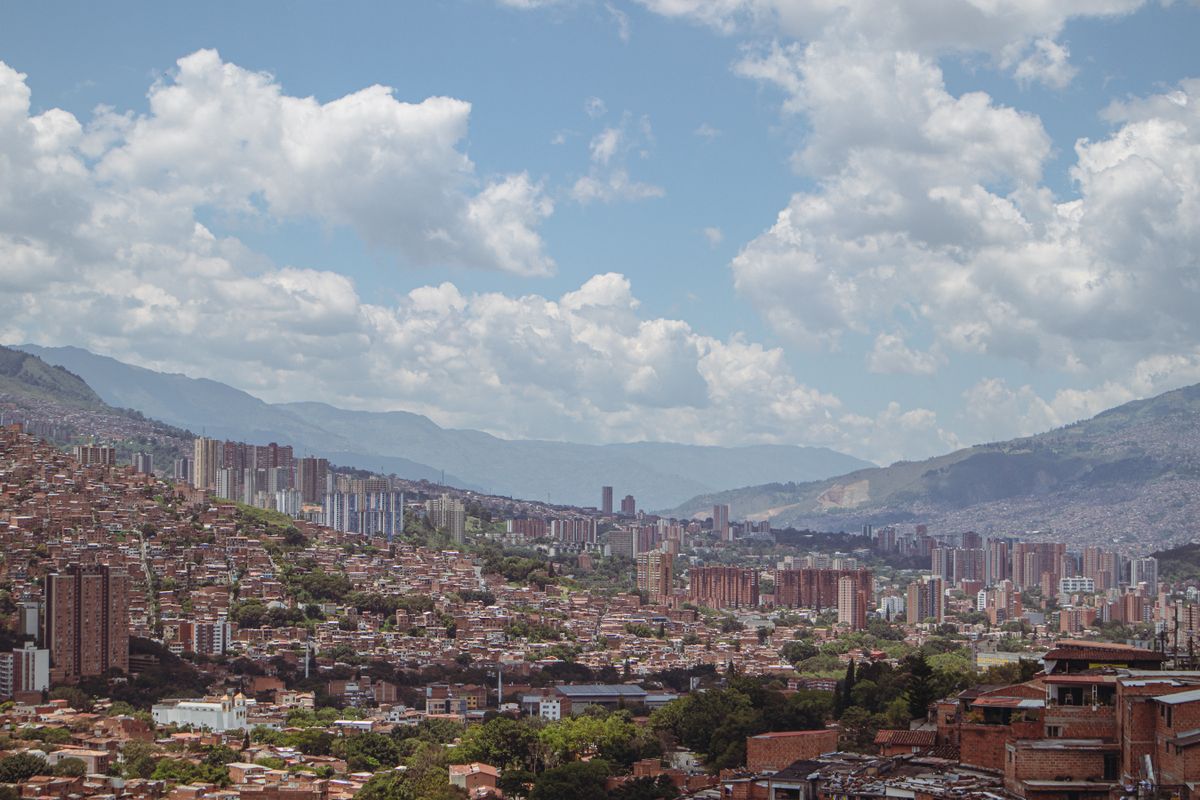 Antioquia · Aburrá Valley, ~1,500 m
Medellín
The deepest American-mover infrastructure of the set. Dated asking samples, El Poblado (read 8 October 2026): 2-bed 68 m² at COP 3,700,000/mo (≈ US$1,142); 3-bed at COP 4,500,000/mo. Individual listings — not a median.
Click here →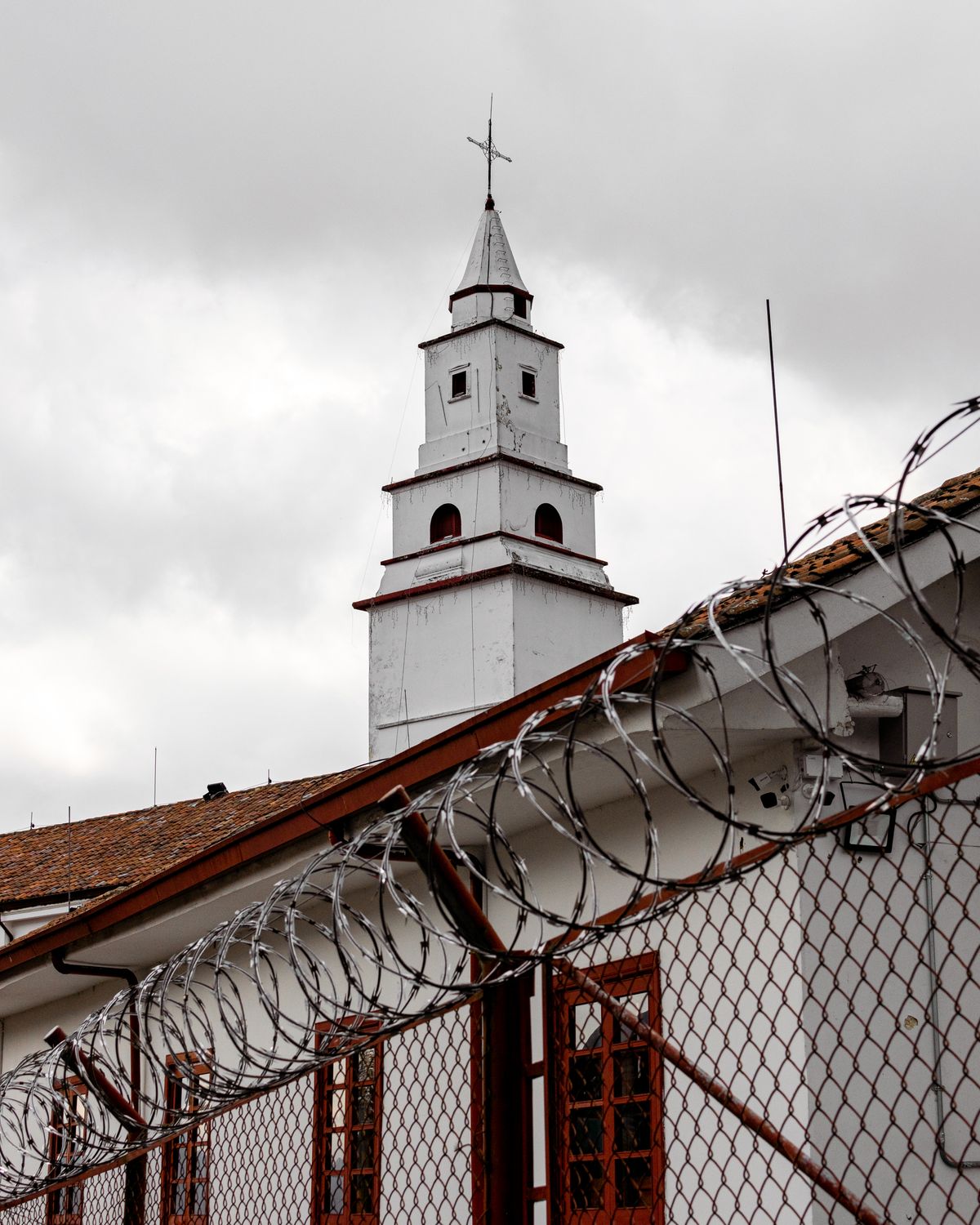 Capital · ~2,600 m
Bogotá
The administrative centre and air hub, with the country’s largest concentration of high-complexity care (named hospitals: GAP). Dated sample: furnished studio in Chapinero Alto, bills included, at COP 1,500,000/mo (≈ US$463), published 2 October 2026. Family-size rents: GAP.
Click here →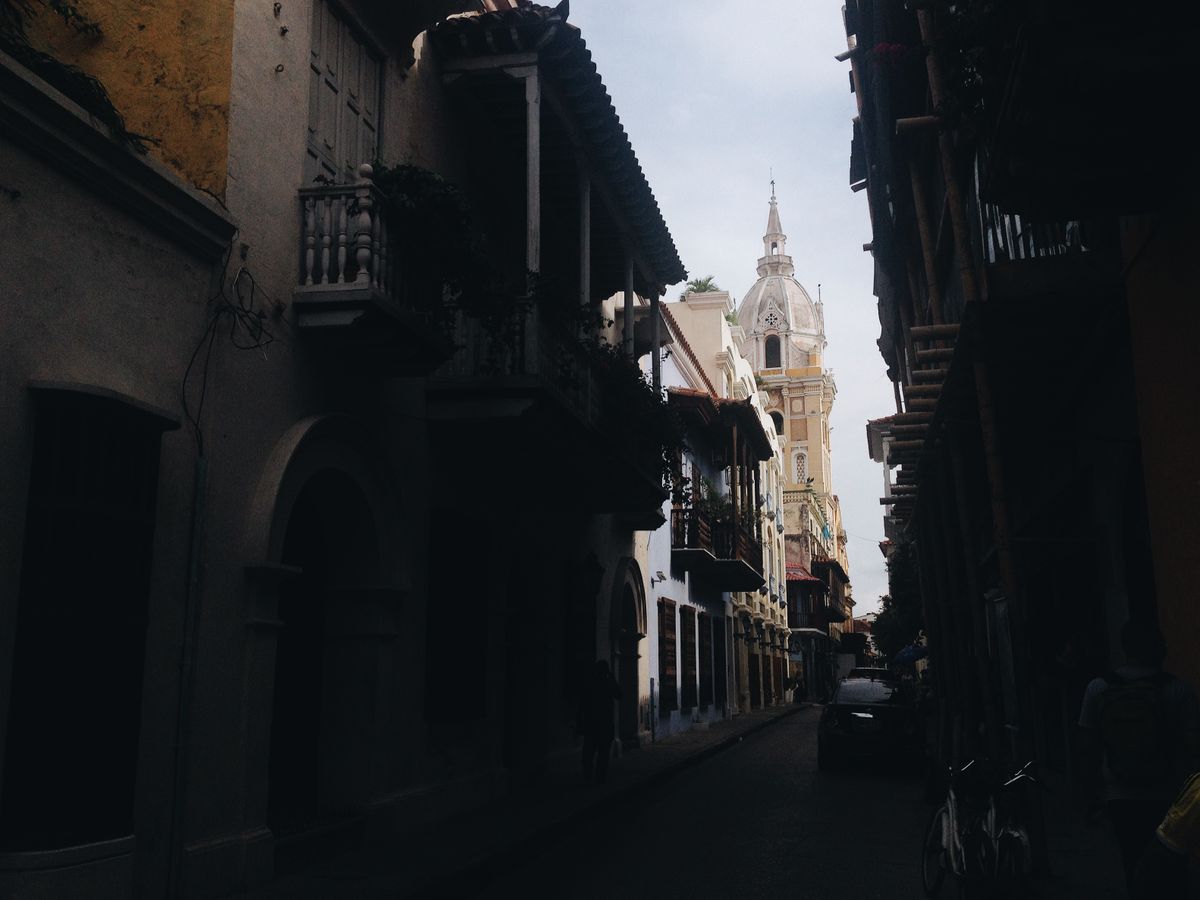 Caribbean coast
Cartagena
The historic walled city — hot and humid year-round. Dated asking samples: El Laguito 3-bed at COP 5,700,000/mo (3 August 2026); Bocagrande 3-bed at COP 4,450,000/mo (12 September 2026). Individual listings, not medians.
Click here →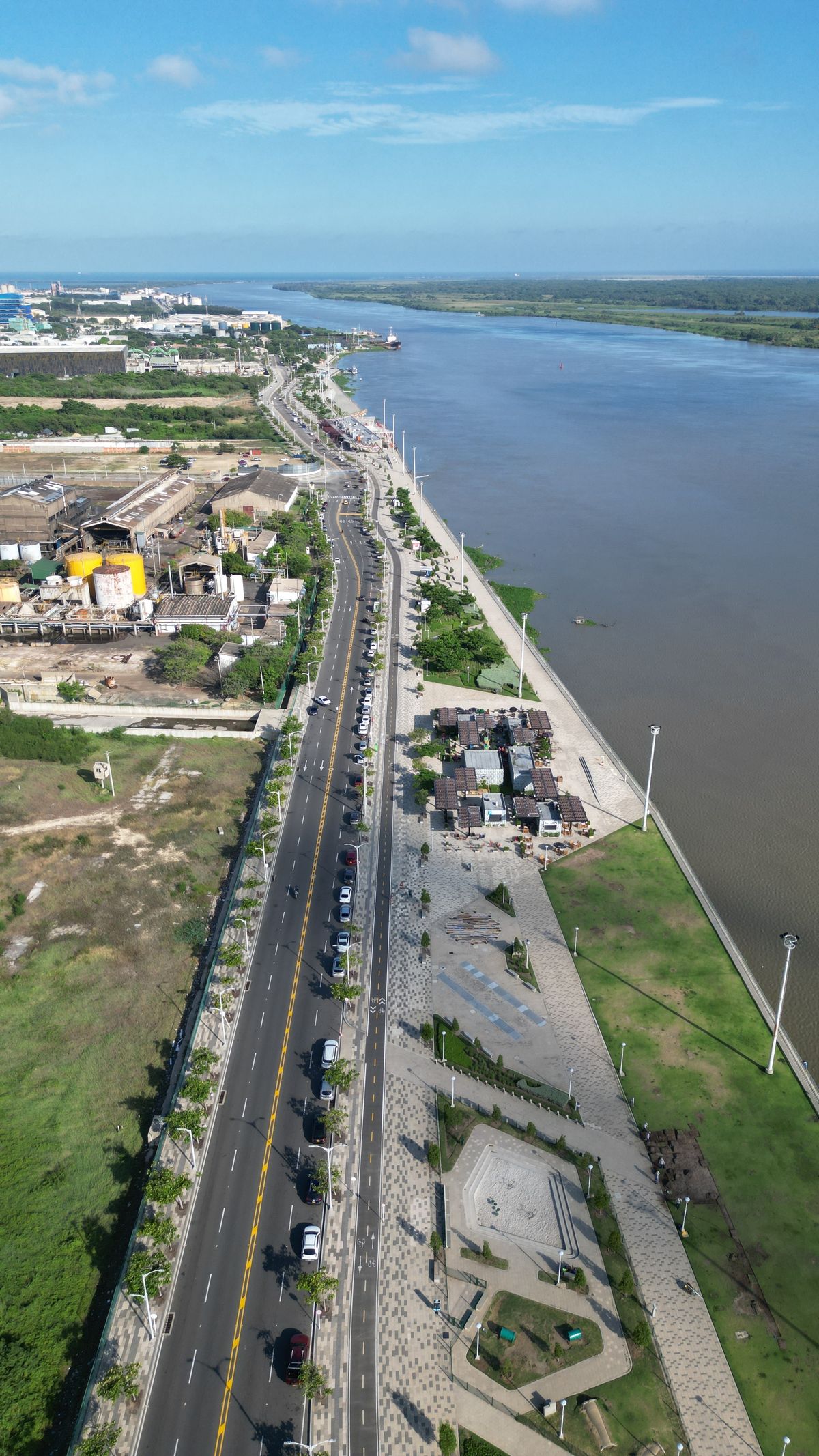 Caribbean coast
Barranquilla
A commercial port city, less tourism-priced than Cartagena. Dated asking samples in Altos del Prado (checked 8 October 2026): 2-bed at COP 4,800,000/mo plus administration, and COP 3,800,000/mo with administration included.
Click here → Central Cordillera · coffee country
Coffee Region — Pereira & Manizales
Smaller, lower-cost Andean cities in the coffee cultural landscape. Dated asking samples: Pereira 2-beds at COP 2,700,000–2,750,000/mo; Manizales 2-beds from COP 1,850,000/mo. One page for both cities.
Click here →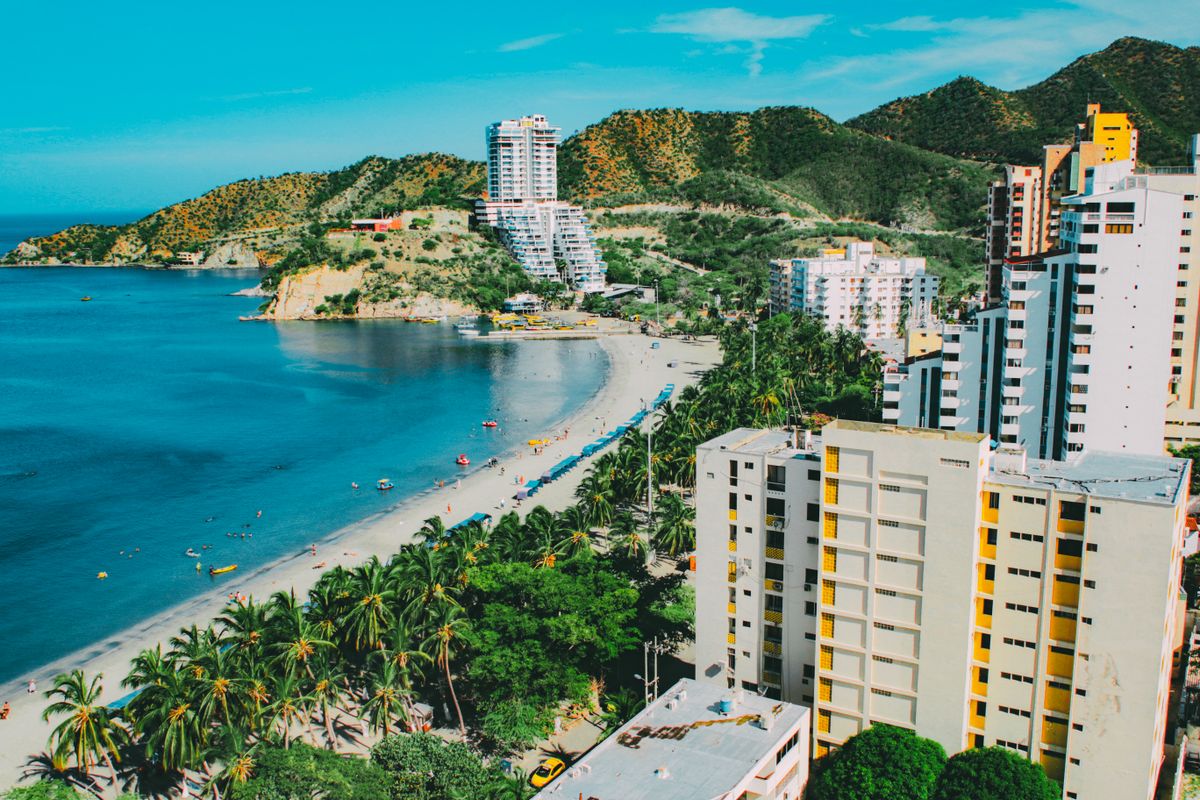 Caribbean coast
Santa Marta
The oldest surviving Spanish-founded city in Colombia, gateway to Tayrona National Park. Dated asking samples in Rodadero Sur (checked 8 October 2026): furnished 2-bed at COP 3,000,000/mo including administration and furniture; a smaller furnished 2-bed at COP 1,850,000/mo.
Click here →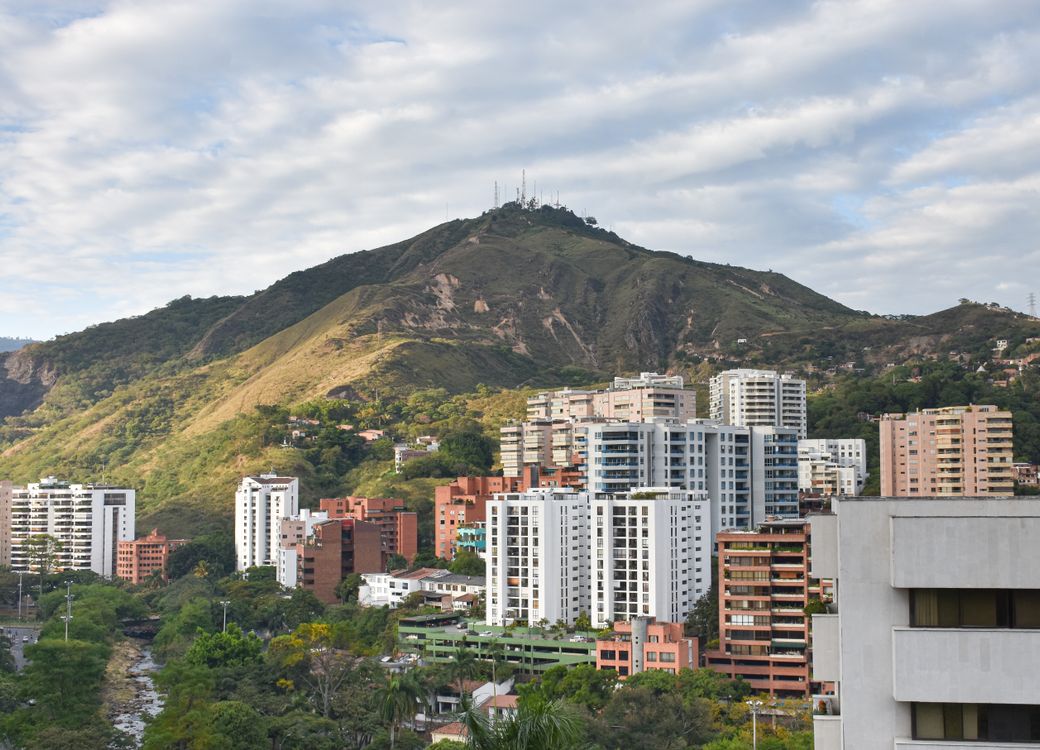 Valle del Cauca · Cauca River valley, ~1,000 m
Cali
Colombia’s salsa capital and the southwest’s referral centre — the one city here with named-hospital verification captured. Dated asking samples (read 8 October 2026): Juanambú 2-bed at COP 3,600,000/mo (≈ US$1,111); portal average COP 2,993,500/mo. Individual listings, not medians.
Click here →People and firms, with the gaps printed
Contacts gate: PARTIAL — checked 8 October 2026. The names below were verified against their own public pages on that date; “verified” means the public contact and service are real enough to approach for a written quote — it is not an endorsement, a referral, or a paid placement, and nobody was contacted for this page. Confirm scope, the signing professional, and fees in a written engagement before any money moves.
Verified — Expat Group (visa services)
English-facing Colombian visa and immigration service (pensioner, rentista, digital-nomad and other routes) with fingerprinting appointments in Medellín, Bogotá, Barranquilla and Cali, and a published split of government fees from its own service fee. Contact: +1 954 799 3692 · sales@expatgroup.co (its pages print a U.S. mailing address in Lewes, DE — confirm the Colombian office address for your city in writing). Printed limit: no individual signing attorney is named on its pages. Ask in writing which licensed Colombian abogado signs and is responsible for your filing, for the current Cancillería checklist for your exact route, and for the fee split.
Verified as a direct policy route — EG Assist (not a broker)
Direct seller of Colombia visa-compliant health policies, affiliated with Expat Group, via egassist.com. Provider-stated on its own product page, checked 8 October 2026: USD 495/year base; USD 742.5/year for ages 76–85; purchase available up to age 85. The caps print with the price, because they define the product: medical assistance capped at USD 18,000, emergency cover for chronic or pre-existing illness capped at USD 300, and pre-existing medication not covered. That is a visa-compliance policy, not comprehensive health insurance — it answers the filing question, not the cost of real cover at 65, 70 or 75.
Verified — Medellín rentals: Casacol & LIV Realty
Casacol (furnished rentals, El Poblado and Laureles; long-term defined as over 30 days, digital contract before payment): reservas@casacol.co · +57 302 285 3252. LIV Realty Medellin (furnished and unfurnished rental book; rentals line +57 311 767 2038). Both are landing-pad and medium-term routes at the expat-facing end of the market, not proof of ordinary unfurnished rents. Ask in writing for the total monthly cost including administración and utilities, the deposit and refund terms, the early-exit clause, and whether the lease is issued in your name in a form usable for address proof.
Verified — USATax.co (cross-border tax, Medellín)
Medellín-based practice for U.S. expats in Colombia, naming its professionals: founder Jeffrey B. Shurtleff, MBA EA (U.S. Enrolled Agent) and Paula Cruz, CPA. Contact: info@usatax.co · +57 (604) 266 8405 · WhatsApp (U.S. office) +1 (714) 642 9995. Printed limits: which jurisdiction the CPA credential sits in, who signs the U.S. returns and FBAR/Form 8938, and fees are not public — the engagement letter must name both signers, the covered forms on each side, and the fixed fee per piece.
Verified as destination contact — PORTAN S.A.S (mover, Bogotá)
Colombian international mover listed in the FIDI Global Alliance directory with FAIM certification, expiry 2029 — the industry’s audited quality mark. Contact: portan@portan.com. Phone discrepancy, flagged: the FIDI directory prints +57 1 2773530; PORTAN’s own site prints +57 3153275245. Confirm the current number in writing. PORTAN verifies the Colombia end of a move; the U.S. origin partner, insurance terms, and delivery scope beyond Bogotá must be named in the written quote.
Listed, not vetted
Real public leads, printed for orientation only — none meets the verified bar yet. Immigration: ColombiaVisas / Visas by James (+1-305-767-2766 · WhatsApp +57-313-390-7109; a named director, but the signing abogados are not named and older PDFs carry stale figures); English Speaking Lawyers Colombia, Medellín (+57 300 563 2424; no named immigration attorney or fee route captured). Relocation: Medellín Expat Services (+57 300 523-5537; no named operator or fee schedule on its own site). Mover (U.S. origin): SDC International Shipping (877-339-0267; destination agent unnamed). Pets: PetRelocation (U.S. origin) and Animals To Go / Pack To Go, Bogotá (export-framed page; inbound scope uncaptured).
Open gaps in this contacts pass
No named signing immigration attorney (the verified visa service names departments, not the responsible abogado). No verified independent relocation consultant. No independent multi-carrier health broker quoting in writing at ages 65, 70 and 75 — and no post-85 cover route at all (the only public senior price route stops at 85, with the caps printed above). No tenant-side long-term rental helper for Bogotá, Cartagena or the Coffee Region. No verified end-to-end U.S.→Colombia mover or pet route — the origin and destination ends exist separately, and nobody in this pass sells the whole route. Those are printed GAPs; the full Colombia dossier carries the fuller shortlist.
Colombia trivia
Small facts, checked against the same sources as everything else on this page.
Santa Marta is the oldest surviving Spanish-founded city in Colombia — and the gateway to Tayrona National Park and the Sierra Nevada.
Colombia keeps UTC−5 year-round, in every one of the seven places on this page.
Spanish is the official language — and English is also official in San Andrés, Providencia y Santa Catalina.
The Republic of Gran Colombia formed in 1819 with today’s Venezuela, Ecuador and Panama; Panama separated in 1903, leaving Colombia’s present borders.
Every visa threshold is a multiple of the monthly minimum wage (SMMLV), so the legal tests move with the peso — the TRM was COP 3,238.88 to the dollar on 8 October 2026.
Pereira and Manizales sit in the coffee cultural landscape of the Central Cordillera — Pereira the regional transport hub, Manizales a university city at about 2,150 m.
Inside the Colombia dossier
What the full Colombia dossier adds
- The route ladder in full — every V, M and R category separated by life situation, with the accumulation clocks and the 180-day absence rule that ends M visas quietly.
- The health file, both directions — the entry rules with the yellow-fever conflict printed unresolved, and the remain-side paperwork: the pensionado medical certificate, the all-risk policy with no invented minimum, and the EPS mechanics with their scope caveat.
- The seven places at dossier depth — dated asking-rent samples per city, the Level 3 safety frame applied neighbourhood by neighbourhood, and the hospital-depth GAPs labelled rather than filled.
- The contacts shortlist with its gaps — who was verified, who is listed-not-vetted, and which categories (a signing attorney, a 65/70/75 broker comparison, rentals outside Medellín) came back empty.
Preparation checklist — Colombia
0% complete · Saved privately in this browser — nothing is uploaded or sent anywhere.
Decide & scout
Documents
Money & health
Land & settle
One product. Every country.
$149, one time. Not one dossier per country — one product that covers every country in the lineup, Colombia included. Order now and your access opens immediately; when the rules change, your dossier is updated free.
14-day promise: if it isn’t what was described, email us within 14 days — we’ll make it right or refund you in full.
Researched and checked 8 October 2026 from Cancillería (Resolución 5477 de 2022), Minsalud, WHO, DIAN material, the U.S. Department of State advisory of 31 March 2026, and the contacts pass summarised above. Colombian visa grants are discretionary and rules change by decree and resolution — confirm every figure against Cancillería’s current checklist at filing. This page is research, not legal, tax or medical advice; it does not replace advice from a Colombian immigration lawyer, a cross-border tax professional or your own clinician. Peso figures are as published by their sources on the dates shown and dollar figures are arithmetic at the 8 October 2026 TRM; asking rents are dated samples, not guarantees. The contacts gate for Colombia is PARTIAL: unverified categories are printed as GAPs, and no one listed here was contacted for this page.