 Settled OverseasSomeday Doesn’t Have to Become Never.
Move to Spain prepared — not guessing.
The non-lucrative visa, the real monthly budget by city, healthcare without Medicare, and the tax residency trap that catches Americans who arrive mid-year — checked, dated, and sourced.
Spain, honestly.
Spain runs the clearest written routes in Europe — one for people who will not work, and one for people who will — and the most-misunderstood one. The non-lucrative visa accepts couples who can show about €36,000 a year in passive income (pensions, Social Security, savings), and in exchange asks for three things Americans routinely get wrong: no work at all (not even remote), a private health policy with no copays, and the patience for consulate appointments that book out weeks ahead. On this page: seven cities compared, the budget ranges that survive contact with reality, and where healthcare runs deep versus where it thins out.
The honest parts stay on the page: Medicare pays essentially $0 in Spain. Rents rose about 8.5% nationally in 2025 — the cheap-Spain brochures are dated. And becoming a Spanish tax resident (183 days in a calendar year) moves your worldwide income into the Spanish system, which is why when you arrive matters almost as much as where.
A short history
Spain was assembled over centuries: Roman Hispania, a Visigothic kingdom, then — from 711 — Muslim al-Andalus over most of the peninsula, with Christian kingdoms pressing south in the long Reconquista. In 1492 Granada fell, uniting the crowns of Castile and Aragon in the same year Columbus sailed. The empire that followed made Spain a world power; the centuries after brought slow decline, Napoleon's invasion, and the loss of the American colonies.
The twentieth century hit hardest: civil war (1936–39), then Franco's dictatorship until 1975. The transition that followed is the Spain you move to: a parliamentary monarchy under the 1978 constitution, EU membership from 1986, and healthcare and pensions run as national rights. Modern Spain's confidence — and its regional politics in Catalonia, the Basque Country and beyond — both grow out of that settlement.
Who moves to Spain — and on what route
People arrive on different paper. This block separates the routes this country’s research actually verifies — with the honest limit of each, and the unverified ones printed as gaps. Checked October 2026.
- Non-lucrative visa — the no-work routeAbout €36,000/year for a couple in passive income (pensions, Social Security, savings). The limit is absolute: no work at all, not even remote work for a foreign employer. Each dependent adds about €7,200/year.
- Digital Nomad Visa — the remote-work routeFor remote employees and freelancers working mainly for non-Spanish employers or clients. Practitioner figures for 2026 put the test at about €2,849/month for a single applicant, with add-ons for a spouse and dependents — confirm against your consulate’s current checklist before relying on them.
- FamiliesDependants are priced into both routes above with added income proof; the dossier’s city chapters split schooling by age band, because a teenager and a six-year-old do not need the same answer.
- A visit is not a routeShort visits run on the Schengen 90-in-180-days rule. The non-lucrative visa is residence, not a long trial stay — plan the routes above before the calendar plans you.
- The property door is closedSpain ended its investor (Golden) visa for new applications on 3 April 2025. Buying a home no longer buys residency.
Health paperwork: entering vs staying. To enter as a visitor: no vaccination is required. To stay on the non-lucrative route, the health file is two documents, both already in the checklist below — a medical certificate in the 2005 International Health Regulations wording (issued within 90 days of applying) and a full-coverage, no-copay Spanish health policy kept in force for the whole stay. No vaccine is required for the visa or the permit. For children: Spanish vaccination is recommended, not legally mandatory, and is not a condition of school enrolment, though a school may ask to see the record. (Consulate checklists checked October 2026; the exact renewal-stage health paperwork is route- and province-specific — your dossier flags it rather than guessing.) El papeleo de salud: entrar vs quedarse. Para entrar como visitante: no se exige ninguna vacuna. Para quedarse por la ruta no lucrativa, el expediente de salud son dos documentos, ambos ya en la lista de abajo — un certificado médico con la redacción del Reglamento Sanitario Internacional de 2005 (emitido dentro de los 90 días previos a la solicitud) y una póliza española de cobertura completa y sin copagos, vigente durante toda la estancia. No se exige ninguna vacuna para el visado ni para el permiso. Para los niños: la vacunación en España es recomendada, no legalmente obligatoria, y no es condición para la escolarización, aunque una escuela puede pedir ver la cartilla. (Listas consulares revisadas en octubre de 2026; el papeleo de salud exacto en la renovación depende de la ruta y la provincia — su dossier lo marca en vez de suponerlo.)
The European travel benefit
Living legally in Spain puts the rest of the Schengen area within easy reach: short trips across member countries are border-light and need no separate short-stay visa. The honest limit, printed with the benefit: a Spanish residence permit does not give you the right to live or work in another member state — settling elsewhere has its own conditions, and long-term mobility follows its own rules.
The political system, in brief
Knowing who runs the country — and how rules change — is part of moving there prepared.
A king as head of state; an elected parliament (the Cortes) governs through a prime minister. Immigration and tax law are national — but healthcare and much daily administration run through 17 autonomous communities.
Leading a coalition government since 2018. Spanish politics are coalition politics — policy moves by negotiation, and regional governments matter as much as Madrid for your day-to-day.
National elections at least every four years, plus regional and municipal votes on their own cycles. Golden Visa headlines aside (that door closed in April 2025), retiree visa rules change through parliament.
Your pension is dollars; your rent is euros. The dossier budgets in euros with the exchange risk printed — a weak dollar can move your real income by a month's groceries.
Seven cities, honestly compared
Couple budgets are monthly ranges for a retired couple renting, indexed late 2026 — the swing factor everywhere is rent, which rose ~8.5% nationally in 2025.
 Madrid
The capital: Spain’s deepest hospital stack, the U.S. Embassy’s benefits unit and Barajas’ nonstop U.S. web — at the highest sampled city-centre rent of the seven, ≈ €1,332/mo (Numbeo, 7 Oct 2026). Summer heat is the trade.
Click here → Granada
The budget champion of the south: roughly €1,900–€2,800/mo for a couple. Alhambra views, tapas that still come free with a drink, and Sierra Nevada skiing within the hour. Summer runs very hot.
Click here → Valencia
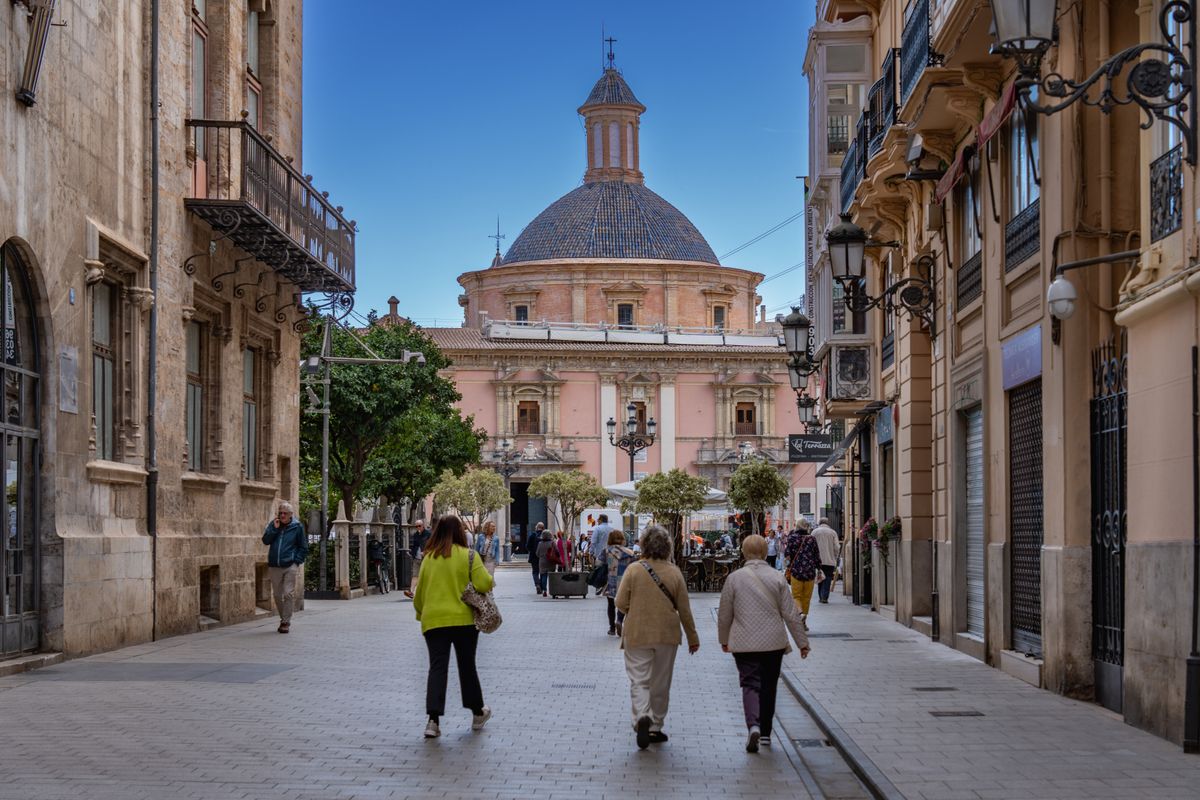
The big-city sweet spot, €2,500–€3,400/mo. Mediterranean beach, a walkable old town, healthcare rated deep — and rents climbing fast, so neighborhood choice decides everything.
Click here → Málaga & the Costa del Sol
€2,500–€3,400/mo in the city; more in Marbella. The densest English-speaking retiree infrastructure in Spain — private hospitals, clubs, and winter escapes that feel like April.
Click here →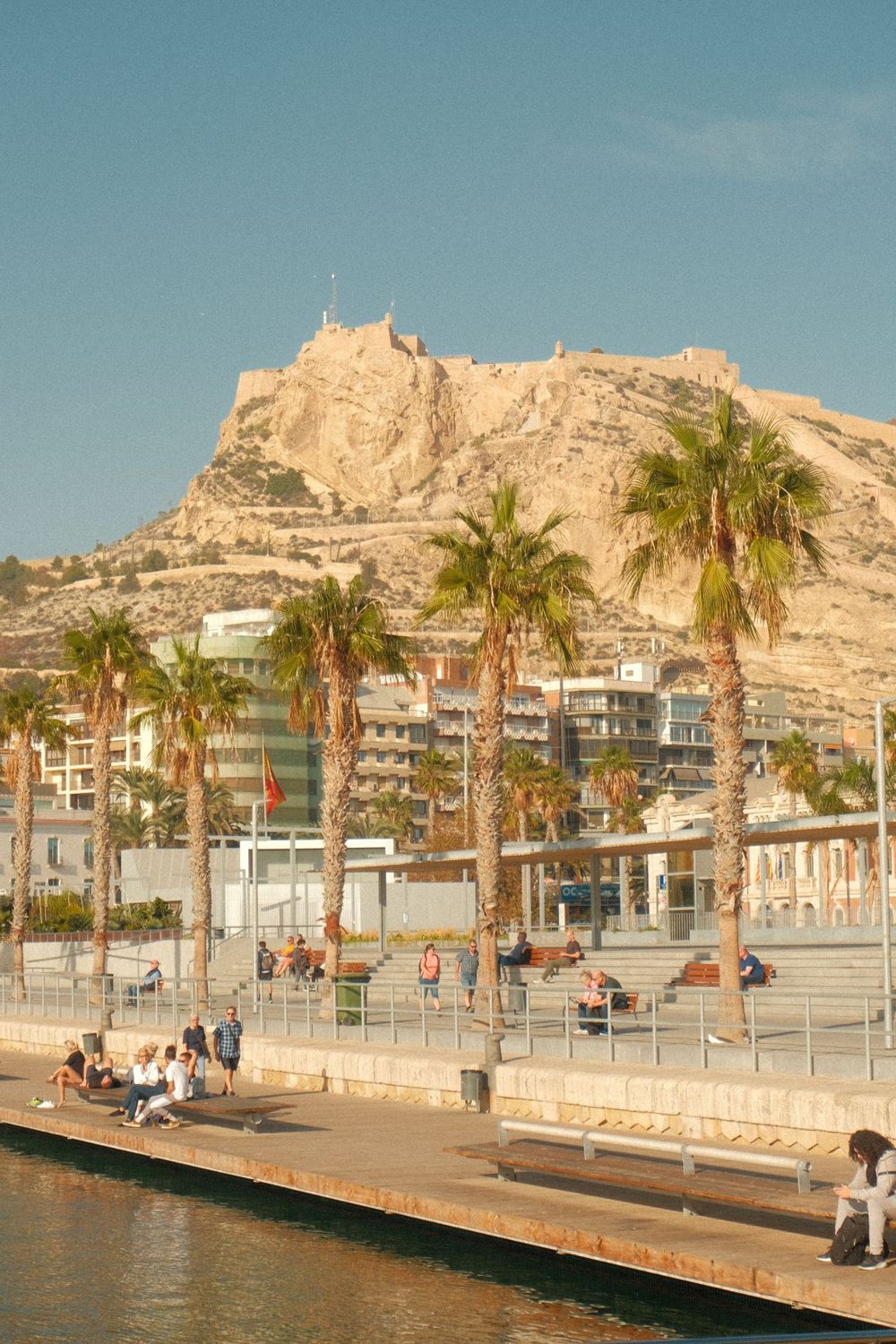 Alicante
The quieter Costa Blanca alternative, in the same €2,500–€3,400/mo band as Valencia. Big expat services, a real Spanish city underneath, and the island ferry at the port.
Click here → Tenerife & Gran Canaria
Island budgets run lower than Palma's and the south coasts stay springlike year-round. Healthcare is deep in the capitals (Santa Cruz, Las Palmas) and thinner in the interior.
Click here →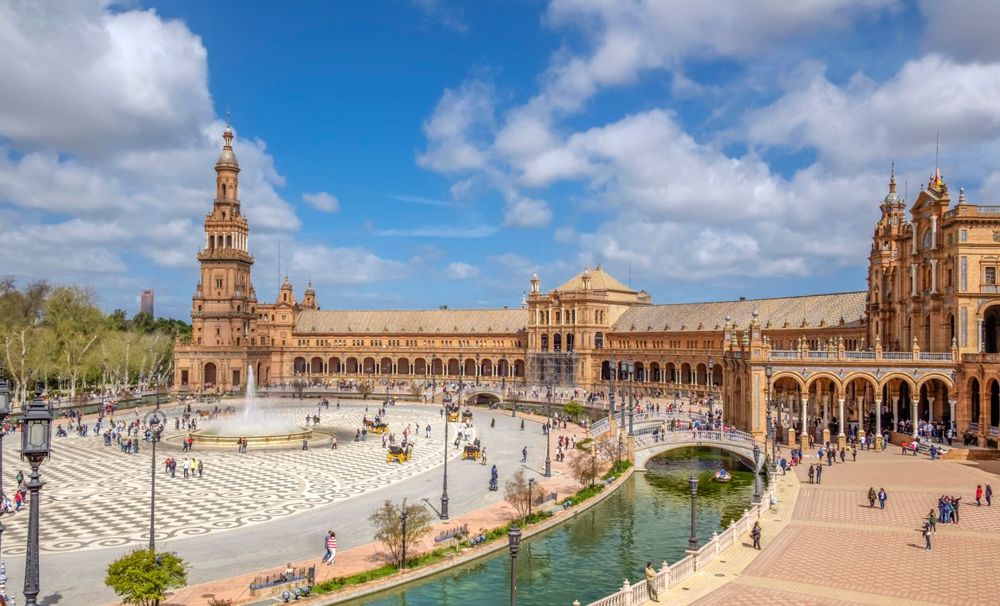 Seville
Andalusia's grand capital: flamenco, orange trees, and some of the fiercest summer heat in Europe — plan around July and August. Budgets sit between Granada and Valencia's bands.
Click here →Trivia: did you know?
Quick reasons Spain gets under your skin — every one of them checkable.
Spain has roughly one bar for every 175 residents — and a Spanish bar is not an American bar: coffee and toast at eight, the menú del día at two, tapas at nine. It's the neighborhood's living room.
In good harvest years Spain grows around half the olive oil in the world — Jaén, in Andalusia, alone is one of the greatest olive regions on Earth.
Spanish isn't the only official language: Catalan, Galician, Basque and more are co-official in their regions — including at the health center.
Barcelona's Sagrada Família has been under construction since 1882 — Gaudí's basilica has taken longer than many medieval cathedrals.
Madrid's Sobrino de Botín, founded in 1725, is recognized by Guinness as the world's oldest continuously operating restaurant.
Lunch at two, dinner at ten: Spain officially keeps some of Europe's latest hours — and roughly two million afternoon naps a day, depending on who counts.
Inside your dossier
What the $149 actually looks like — a document built around you, not articles for everyone.
Your Spain Relocation Plan
Assembled from your planner answers: household, income, cities, timeline.
The couple's income test. Show about €36,000 a year in passive income (400% of IPREM for the applicant + 100% per dependent, as of late 2026; source: Spanish consulate non-lucrative-visa checklists, checked October 2026) — and bring a buffer, because the test is measured in euros.
Every figure in your dossier carries its source and its “as of” date — so you can check us before you trust us.
The gap we won't hide: no standard policy sells hospital-inclusive, no-copay cover past 75 — it gets quoted case by case. Your dossier prices that honestly, by age.
Preparation checklist
Tick things off as you accomplish them. Your progress saves on this device only — nobody else sees it.
Decide & scout
Documents
Money & health
Land & settle
Everything you need to prepare your move — in one place
- The interactive planner plus your personal Spain dossier
- NLV steps, document lists and fee tables — each figure dated and sourced
- Children covered: schooling guidance by your children's ages — options by age band and enrollment timing — and how kids change the residency math
- Pets covered: bringing your dog or cat — entry rules, the paperwork sequence, airlines and typical costs, by country
- Banking covered: opening a local bank account, moving pension money in, keeping your U.S. accounts healthy, and the FBAR / $10,000 reporting rule
- City chapters with real couple budgets, and healthcare depth by city
- Vetted contacts: names, contact details, evidence, verification date
- Free updates whenever Spanish rules change the numbers
- 14-day promise: if it isn't what was described, email us within 14 days — we'll make it right or refund you in full.
Secure checkout powered by Stripe. Access opens as soon as your order confirms.
This page is education, built from public sources checked on the dates shown. It is not legal, tax, or medical advice; visa outcomes and underwriting stay with the Spanish consulates, insurers, and your own licensed advisors. Figures marked with a directory or broker name were read from that source; anything we could not verify is printed as a gap.